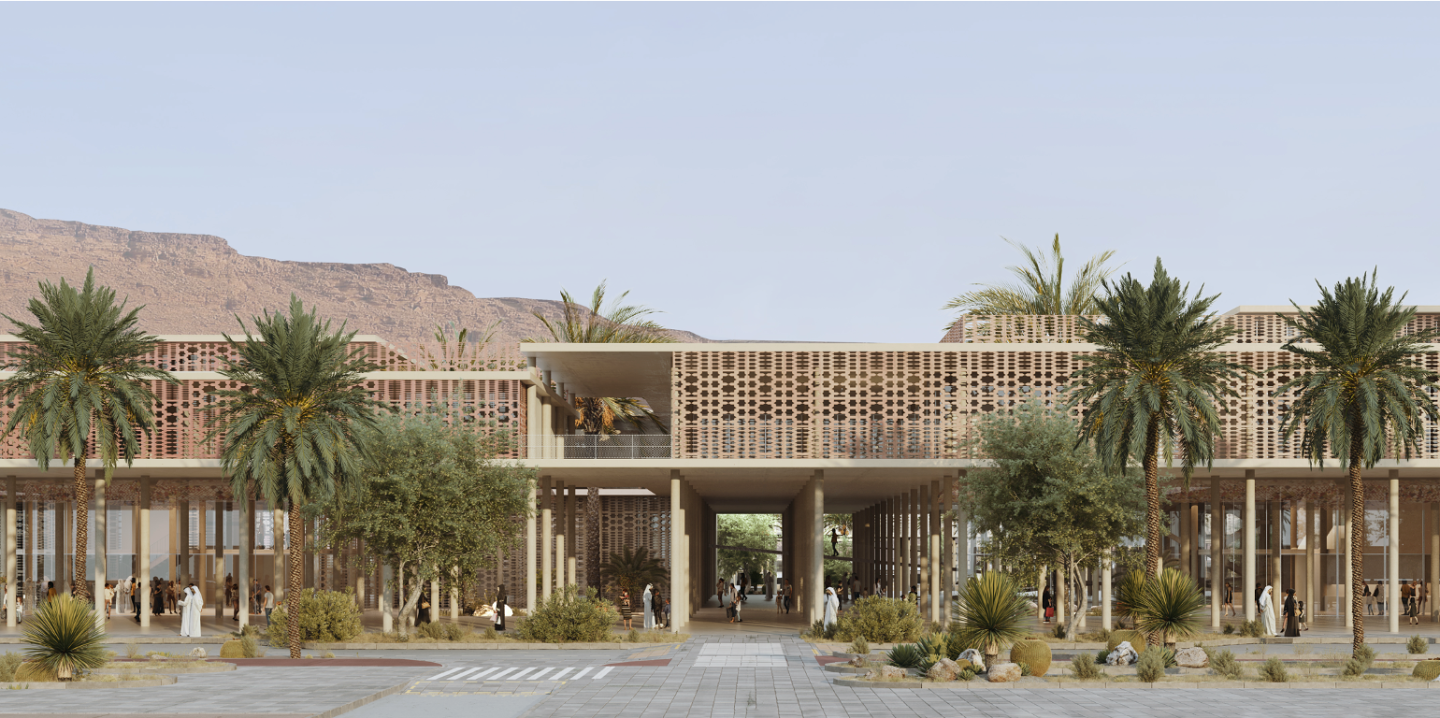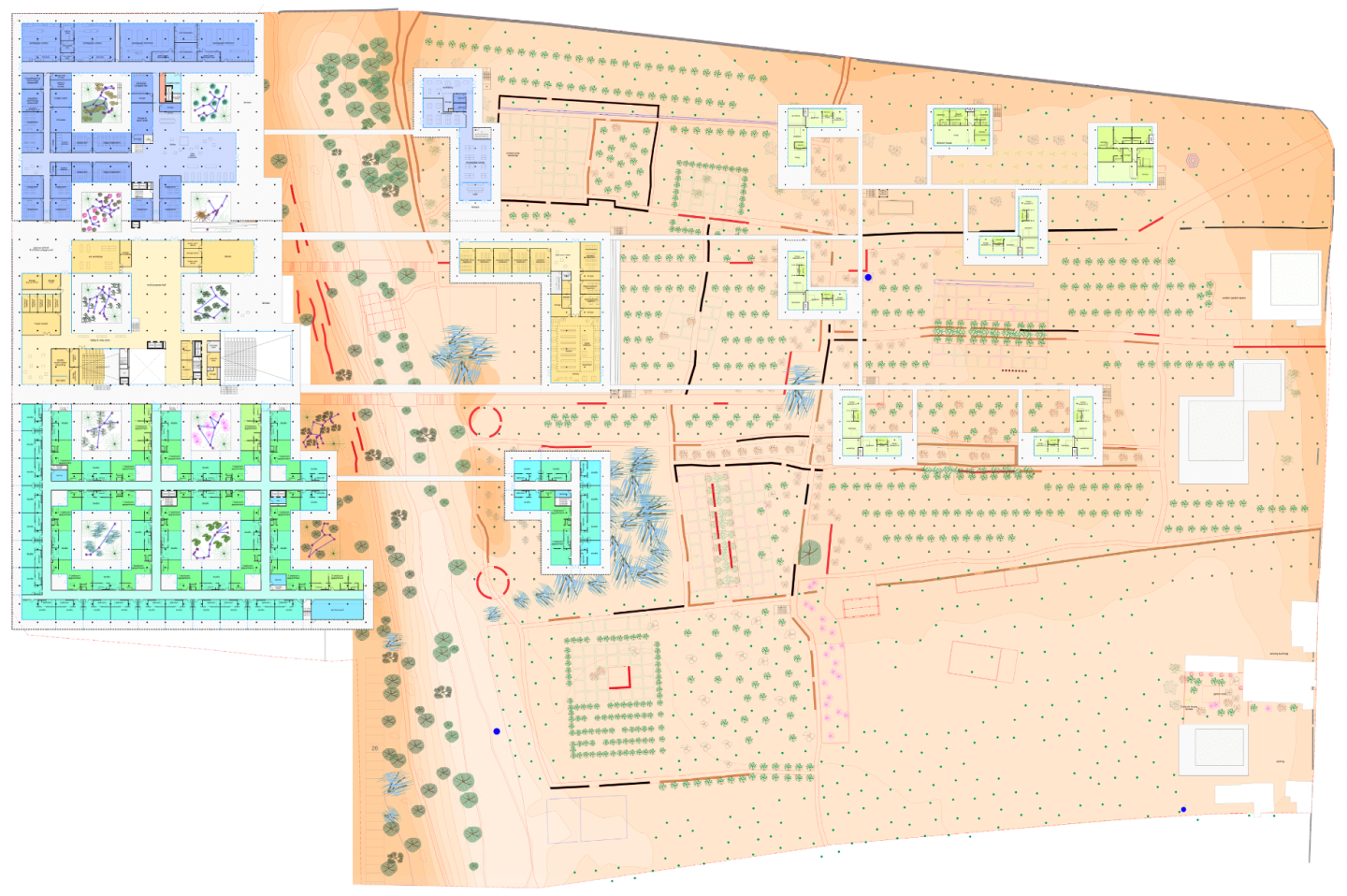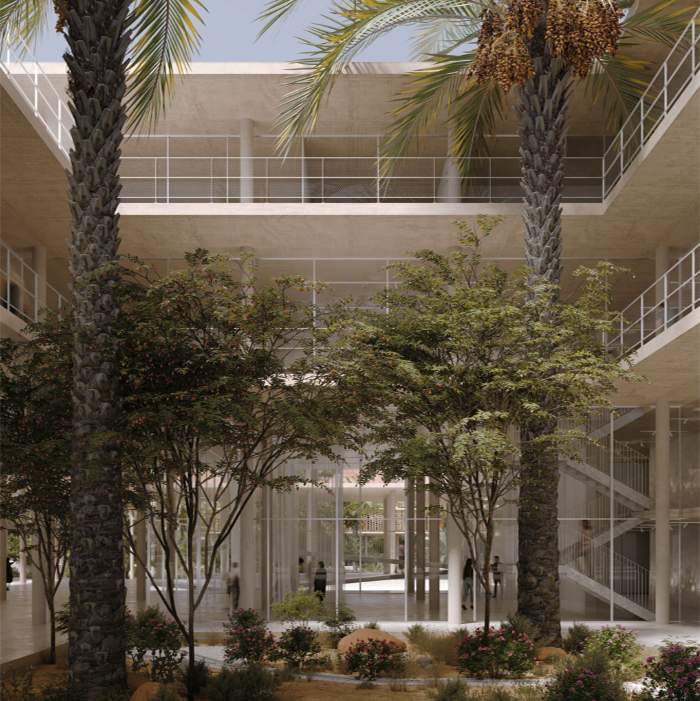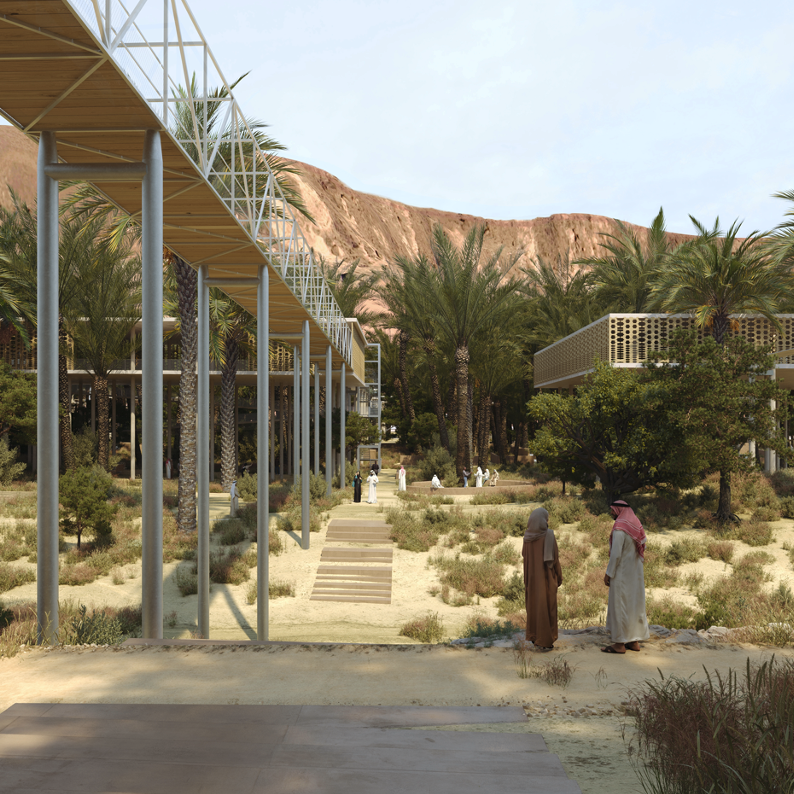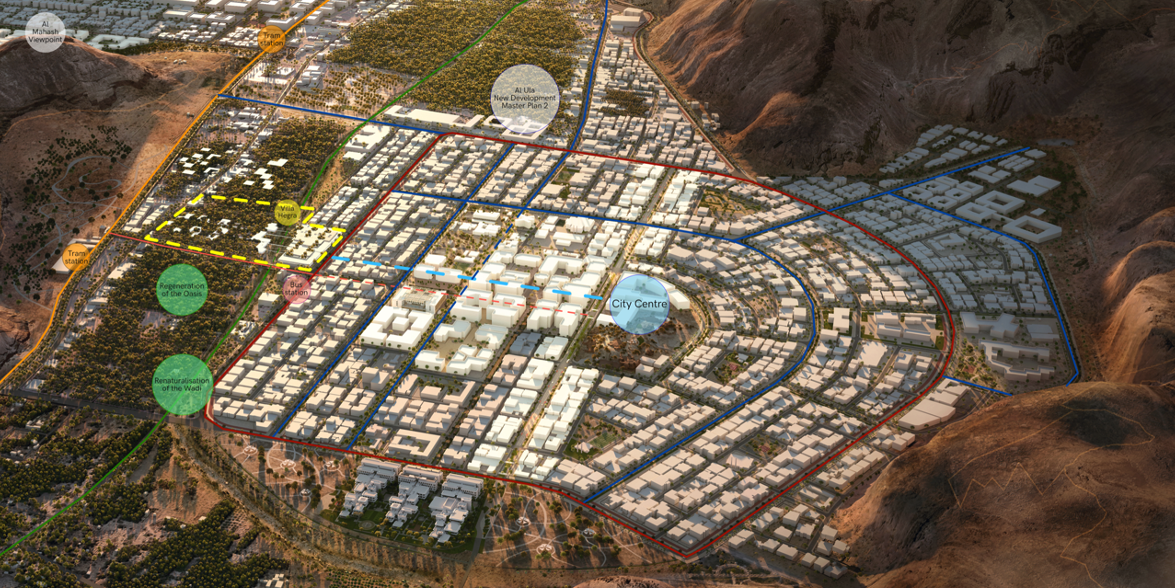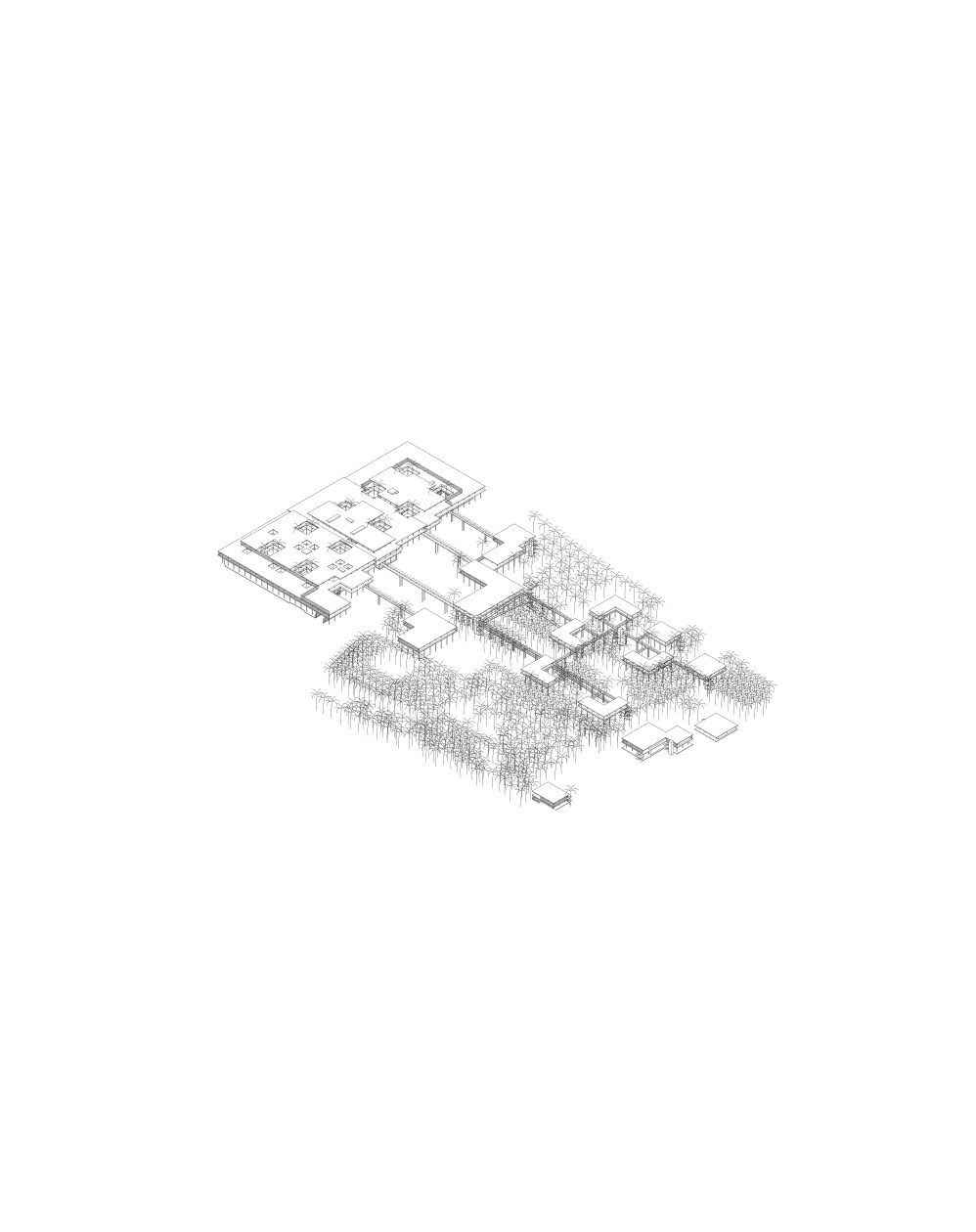
The project draws on the traditional organisation of the old town in terms of density and climate intelligence. In the city plot, like in the winter town, the building is compact to prevent too much heat gain or loss, highly protected on the perimeter, and organised around courtyards that bring light and ventilation. On the oasis plot, lighter, spread constructions draw inspiration on the summer city as these benefit from a milder microclimate, the shade of the palms, and humidity of the citrus trees.
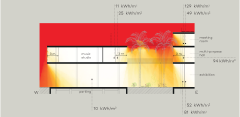
In these latitudes, shelter from the strong sun is primordial (solar exposure can increase felt temperature by some 10ºC) to avoid that temperature increases above the air one: the project provides large canopies, slabs extend for 3m or more (cutting down radiation on glazed surfaces by at least 55%), musharabiyas protect from the horizontal rays, palm trees cover outdoor spaces, and in the roofs, a double layer (with a canopy of PVs or simply rocks) creates an air gap that avoids direct contact with the sun. The spaces in-between cool down the air before it reaches inside, progressively controlling the climate. When the weather allows it, large sliding windows remain open, extending the space, to enjoy outdoors. The structure holds concrete to stabilise peak temperatures: during summer, the main levels have natural temperatures 3-8ºC lower than outdoors, which in its turn reduce the need for air conditioning.
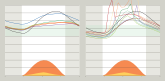
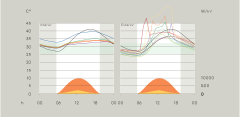
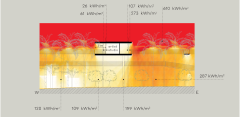
Inside the oasis, measured air temperatures are 2-3ºC lower than in the surroundings. The ground floor is always in the shade: palm trees cover the highest layer, whereas citrus and fruit trees are closer to the human height. Humidity is higher, especially in the afternoon, and radiant temperatures are also much lower due to the low surface temperatures of the leaves, which effectively balances air temperature. Felt temperature is all year long 3-8ºC lower than air temperature. The large shaded parvis is a type of space is unique in these climates. As no surface is ever exposed to the sun, radiant temperatures never surpass air temperature. During hot days, the thermal sensation is some 5ºC lower than air temperature and can be up to 10ºC lower than in the street.

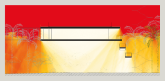
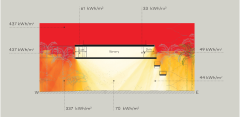
Incoming radiation
-
0
-
100
-
200
-
300
-
400
-
500
Solar radiation represents the solar heat received during the hottest months
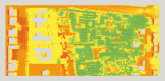
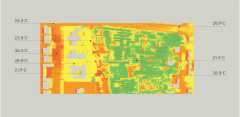
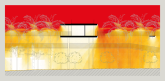
Felt temperature on a typical warm day
-
0
-
4
-
8
-
13
-
18
-
23
-
29
-
35
-
41
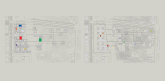
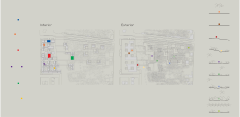
The felt temperature considers air temperature, surface temperatures, solar radiation, wind speed and humidity. The reference is PET for hot and arid climates.
This map shows the temperatures in the afternoon of a typical warm day, when air temperature is 30.0ºC.