MainSilhouetteArtboard 1
Artboard 1
Chateau Lafite_Axo_silhouette
Artboard 3
Artboard 1
Artboard 3
Ghent_Axo_silhouette
GL Pau_Axo_silhouette-01
EMVS_Axo_silhouette
Ministerio_Axo_silhouette
Hamburg_Axo_silhouette
Cafferata_Axo_silhouette
Halle bioclimatique_Axo_silouhette-small
Palenque_Axo_silhouette
Crystal Palace_Axo_silhouette
Carriego_Axo_silhouette
Volumes résiduels de La Défense
Paris, France
Paris La Défense
Baukunst
2020
10100 m²
Space valorization
Activities
Studies in development

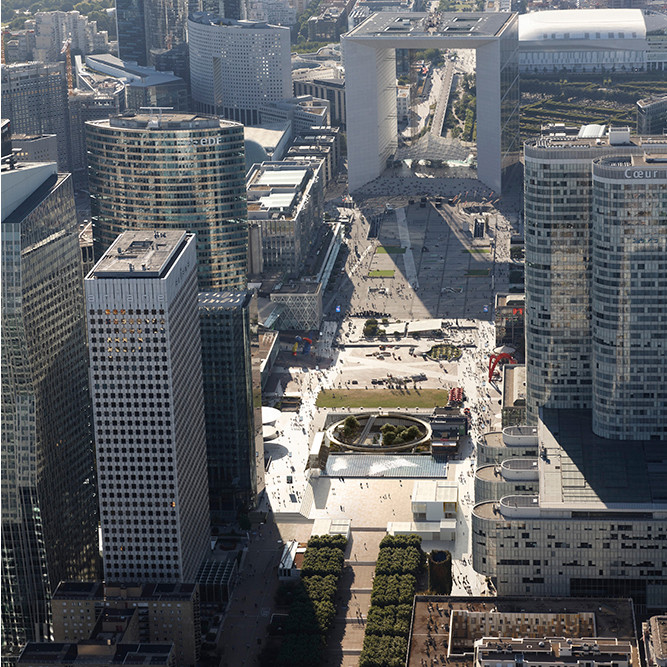
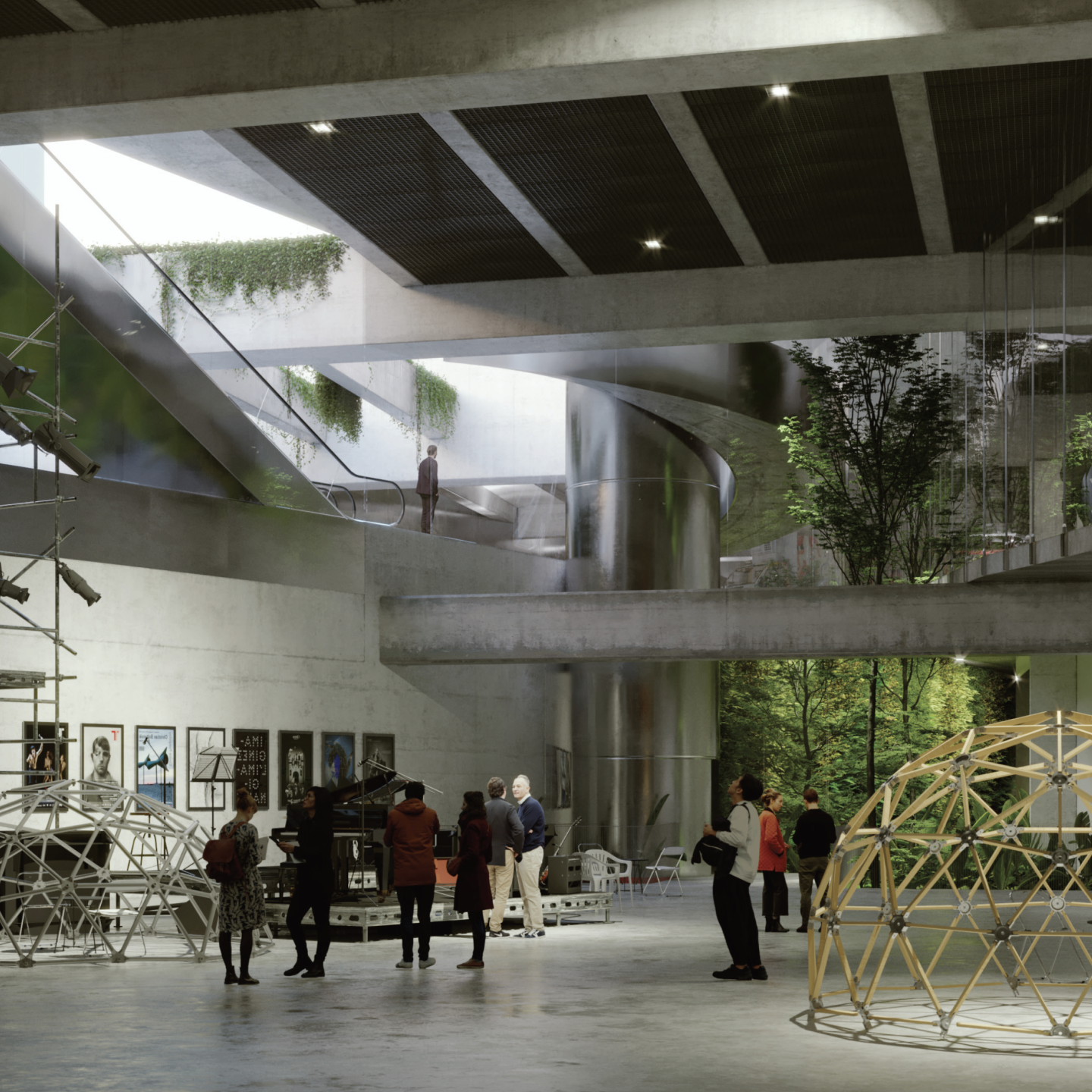
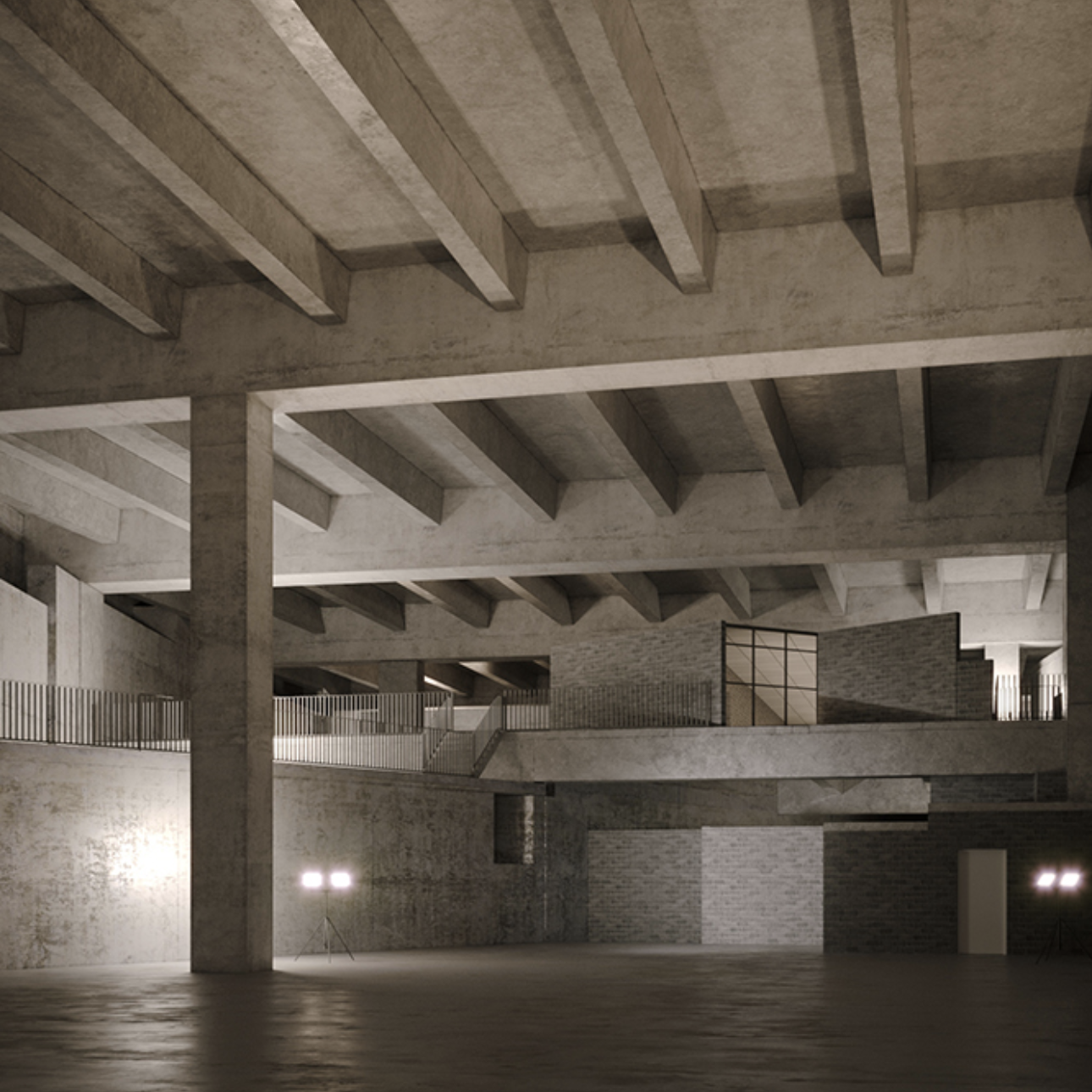
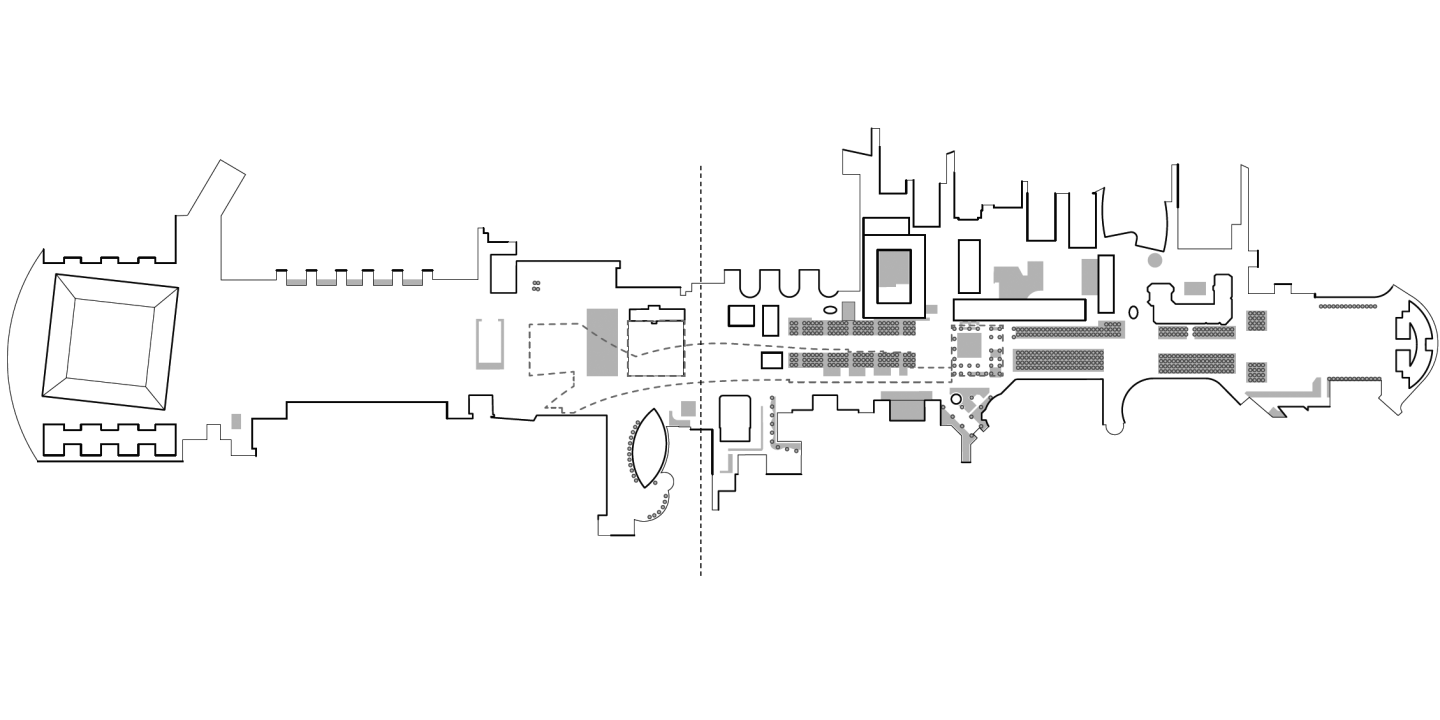
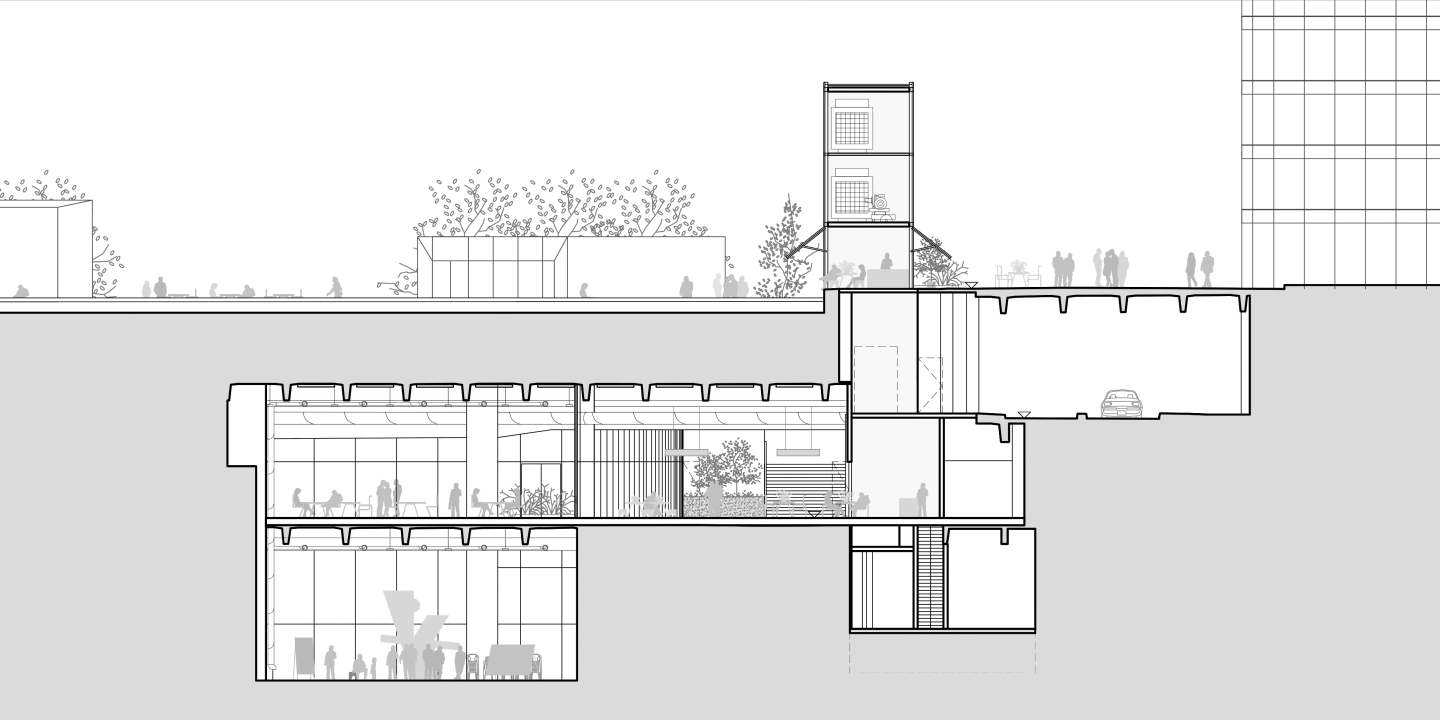
Below the esplanade of La Défense in Paris there are large unused volumes in between highways and metros built in concrete. The intervention seeks to valorizing those spaces by bringing liveable conditions to the underground. The project creates an underground promenade that connects all the new spaces and that sometimes opens to the sky. The intention is to preserve as much as possible the original state of the concrete, to benefit from its thermal inertia for stabilizing conditions throughout the year. However, this poses a challenge to face regulatory compliance. This project is still ongoing.

Daylight Autonomy DA[300]

In Autonomy
  • 0
  • 10
  • 20
  • 30
  • 40
  • 50
  • 60
  • 70
  • 80
  • 90
  • 100
% of time with 300 lux

Daylight Autonomy calculates the percentage of time each point in space receives 300 lux or more naturally. 300 lux gives the impression of a daylit space


Shading mask
Visible sky portion
Sun is visible
s
Sky vault covered by surrounding construction

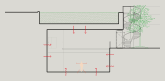
Principle of thermal inertia

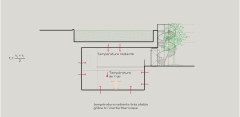
The volumes of La Défense are buried underground, meaning that the floor and walls are in contact with the ground. Also, the structure which is apparent both in the floor, the roof and walls is made of concrete. Both the ground and concrete bring a substantial amount of thermal inertia, which maintains radiant temperatures almost constant throughout the seasons. This effect stabilises air temperature and even more the thermal sensation. The deeper the spaces, the more stable the temperature throughout the year.
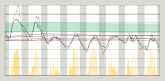
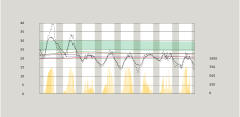
Measured temperature

Primary axis: temperature
t
ºC
exterior measured
ºC
exterior from weather station
ºC
Space at -8m
ºC
Space at -12m
ºC
Secondary axis: solar radiation
r
W/m²
Global solar radiation
W/m²

“Historically, the plinth of Paris La Défense was designed to separate the functions intended for users of the district from those of a technical or logistical nature. Thus, several tens of thousands of m² of underground space are unused.
In order to develop the basis for a programme in permanent movement, Baukunst follows two complementary axes: (1) the creation of a continuity between the different spaces that are today compartmentalised, and (2) the optimisation of the existing ≪ porosity ≫ between the slab and the lower levels.
Two major achievements of the pilot project are necessary to make these principles a reality:
-a public promenade evoking the passages of Paris. As the backbone of the project, this walkway will make it possible to distribute the successive volumes and reach the Place Basse,
-a monumental ring-shaped footbridge ≪ floating ≫ above the Place de la Statue. As the main entrance to the volumes, it will be accompanied by a qualitative landscape treatment. Interior gardens and biotopes will be linked to the green spaces of the slab by hoppers bringing in natural light in the image of a patio.
The interventions will aim to de-compartmentalise spaces and maximise possible porosities.”
PLD

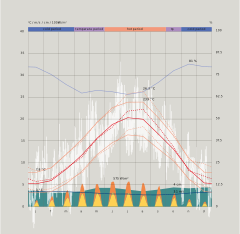
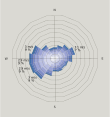
The climate of Paris is temperate with a summer average of 21ºC and peaks reaching 33ºC, and a winter average of 6ºC with peaks reaching -5ºC. In general, the most common source for energy consumption is heating, but special attention needs to be given to the very hot days, as they become more and more frequent. Solar radiation is considerable, with an indirect proportion that is very high. Solar control will be important to regulate heat gains and optimise indoor comfort passively. Prevailing winds come from west-south-west and are not very strong, as the average speed is of 2.5 m/s.

Climate summary

Average temperature
t
(°C)
Avg. min. and avg. max. temperature
t
(°C)
Relative humidity
w
(%)
Daily diffuse solar radiation
r
(100xW/m²)
Daily total solar radiation
r
(100xW/m²)
Wind speed
a
(m/s)
Monthly precipitations
w
cm
Daily range
t
(°C)
Temperature predictions for 2050
t
(°C)

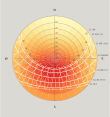
Sun path

Solar altitude
s
  • 0
  • 240
  • 480
  • 720
  • 960
  • 1200
kWh/m2

Wind rose

Wind frequency
a
  • 0
  • 1
  • 2
  • 3
  • 4
  • 5
  • 6
  • 7
  • 8
  • 9
  • 10
m/s
Close