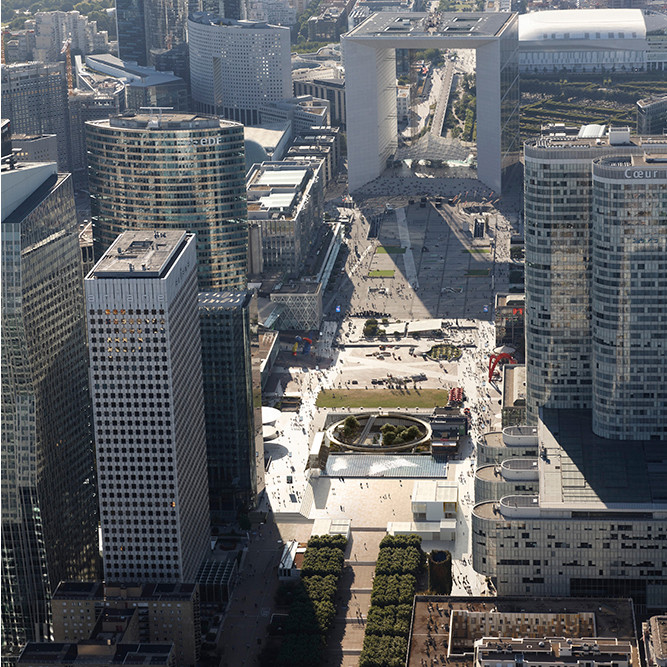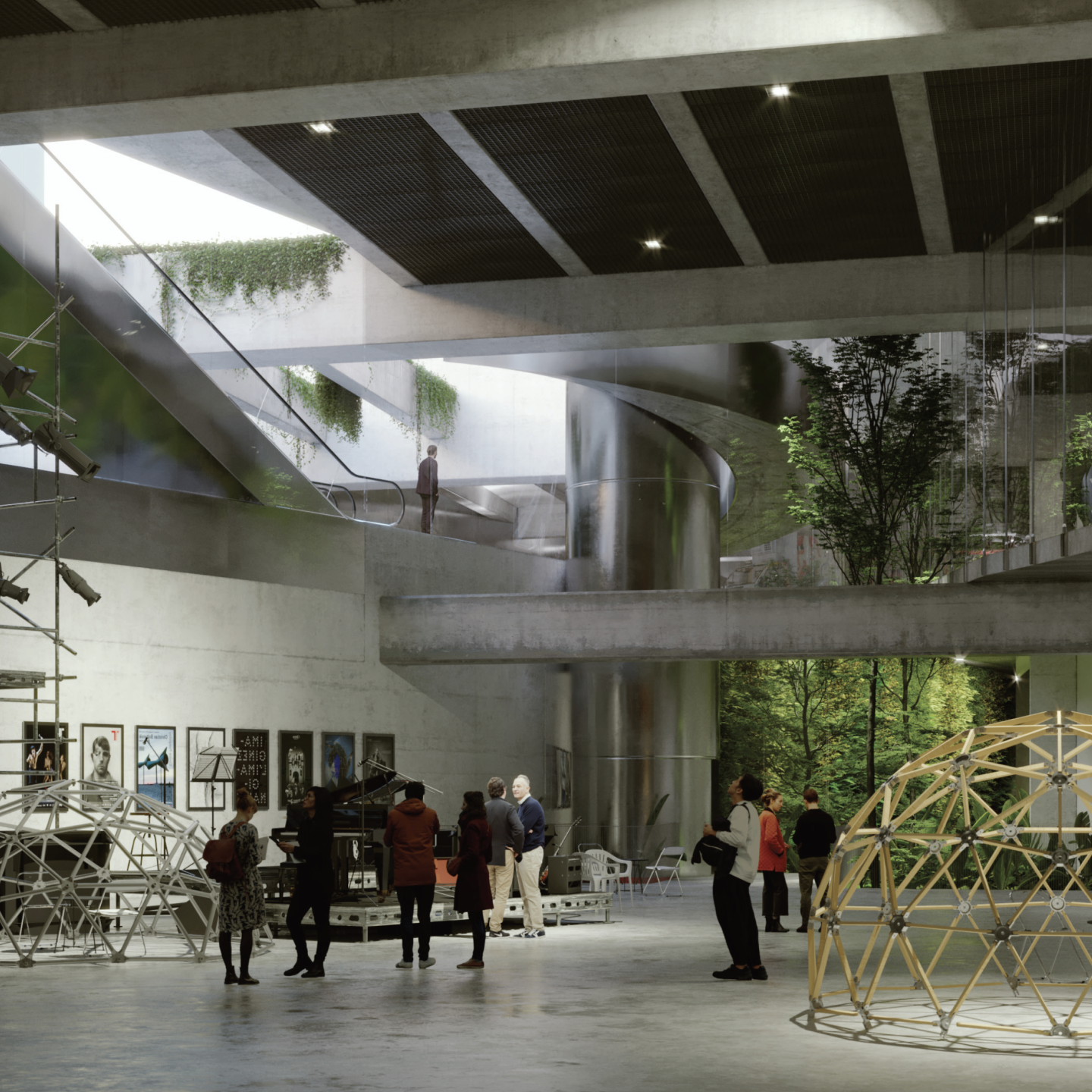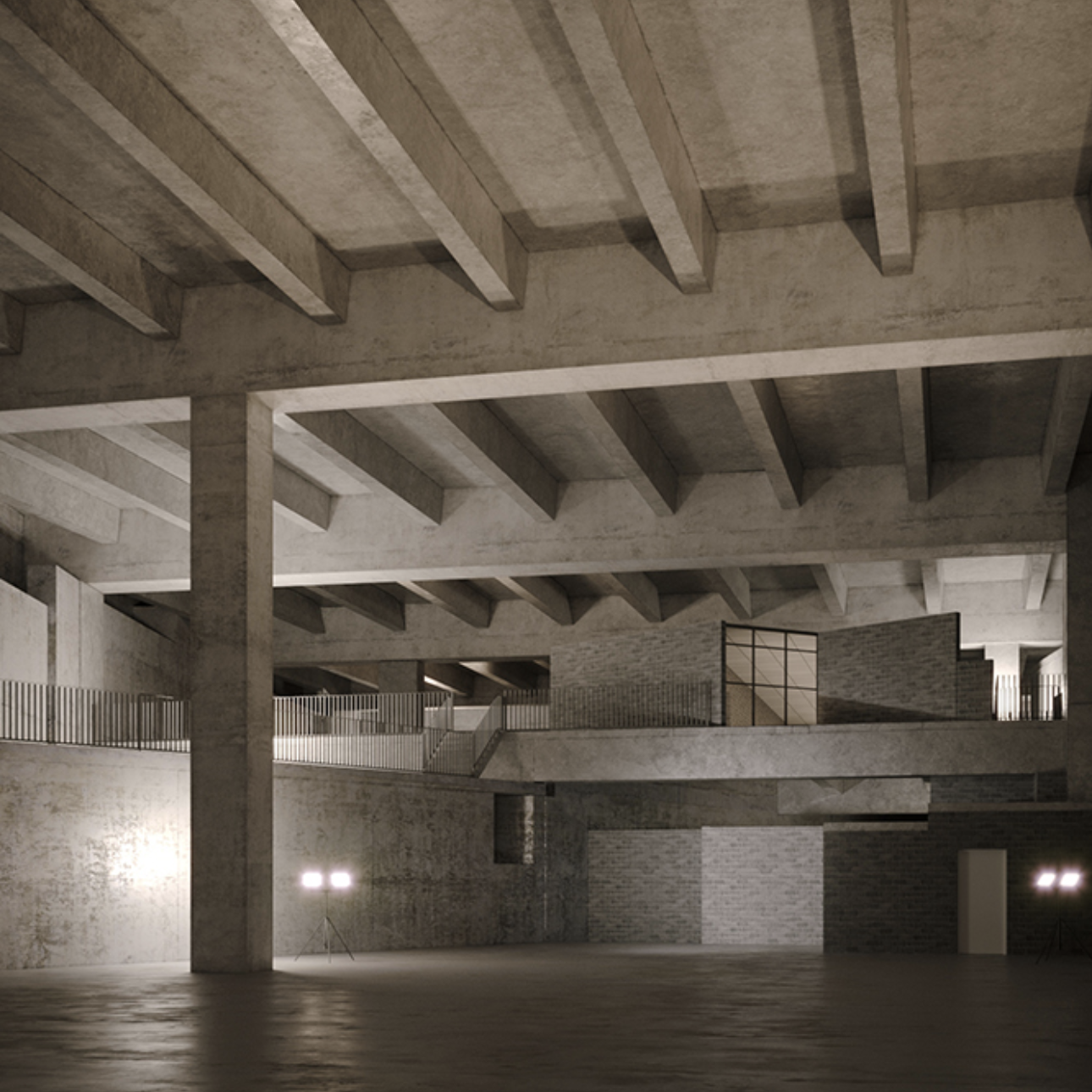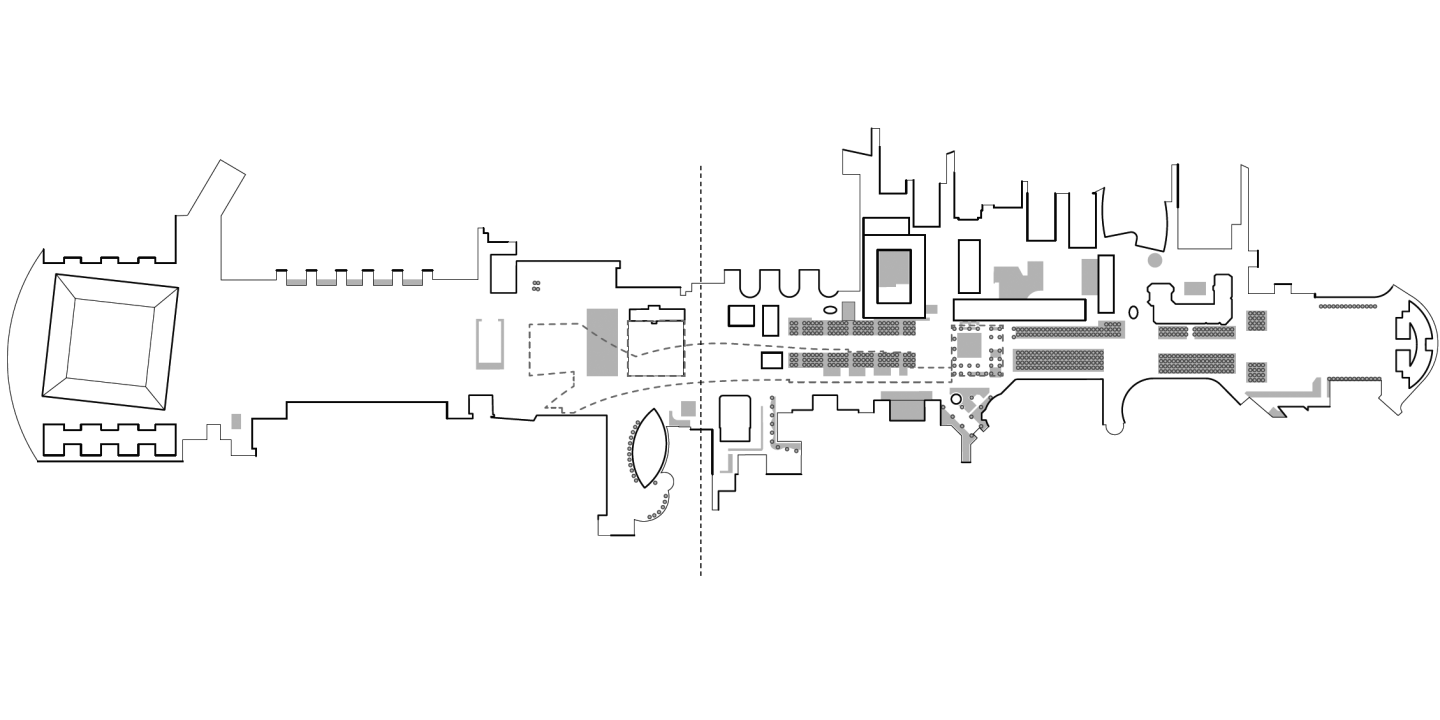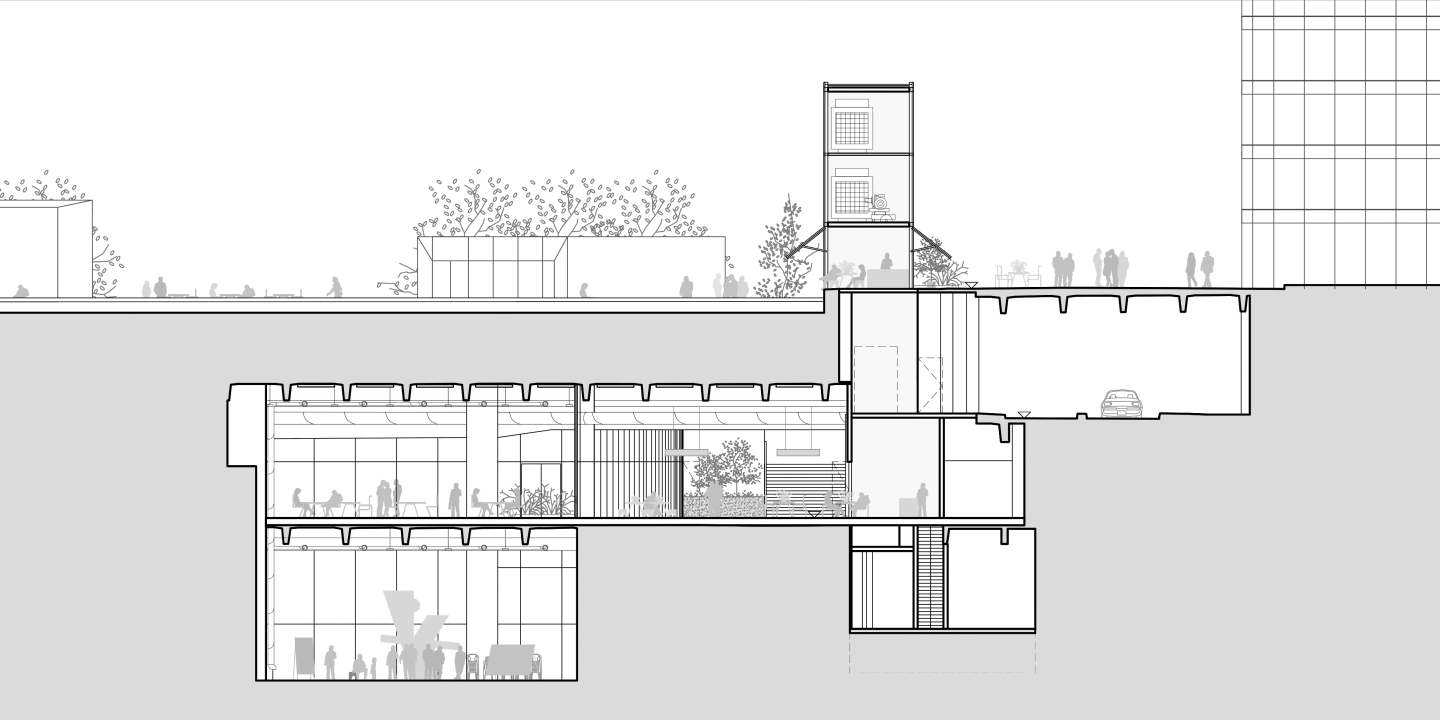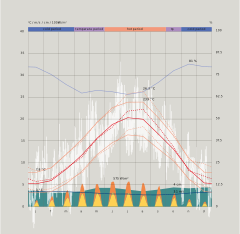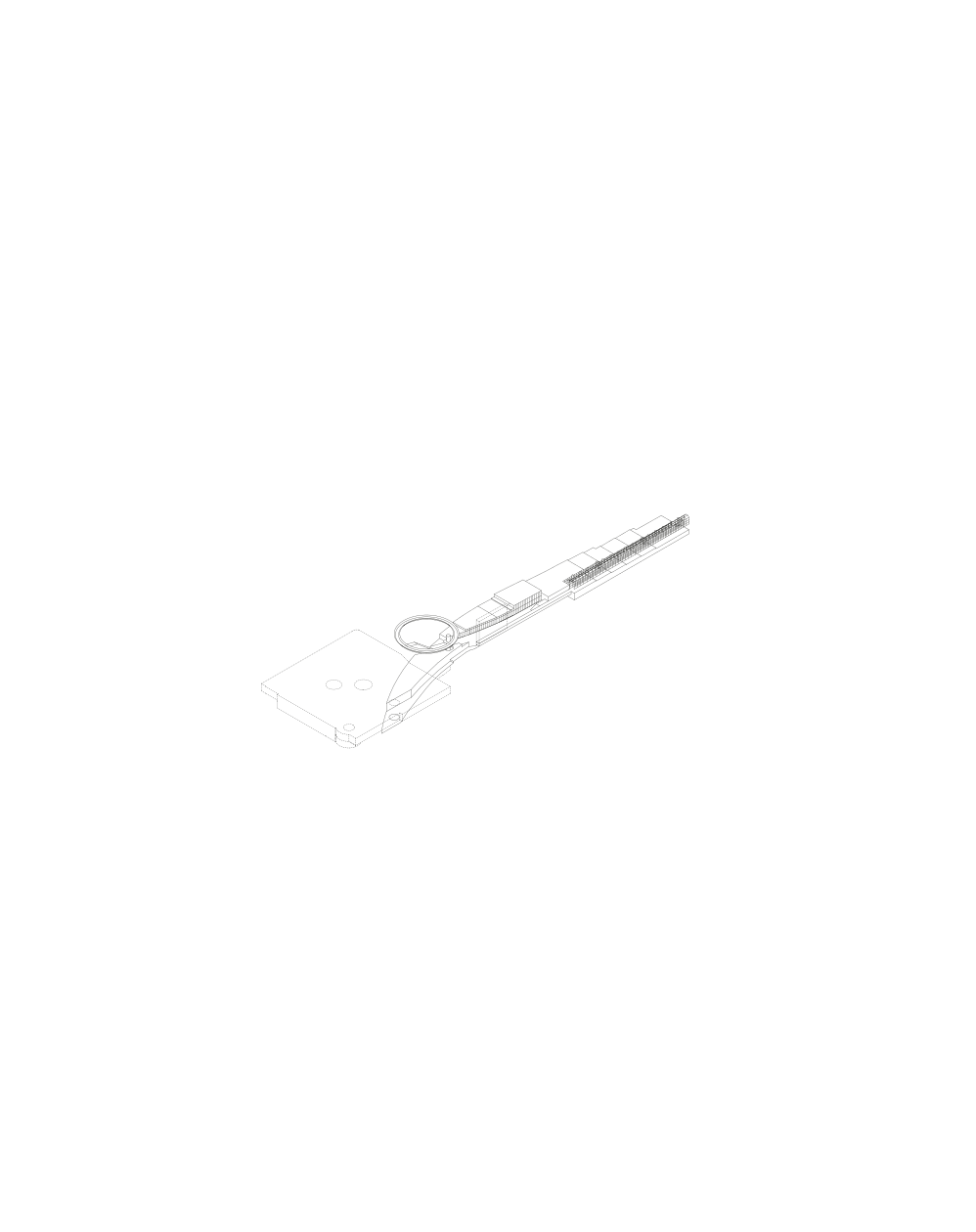
Below the esplanade of La Défense in Paris there are large unused volumes in between highways and metros built in concrete. The intervention seeks to valorizing those spaces by bringing liveable conditions to the underground. The project creates an underground promenade that connects all the new spaces and that sometimes opens to the sky. The intention is to preserve as much as possible the original state of the concrete, to benefit from its thermal inertia for stabilizing conditions throughout the year. However, this poses a challenge to face regulatory compliance. This project is still ongoing.
Daylight Autonomy DA[300]
-
0
-
10
-
20
-
30
-
40
-
50
-
60
-
70
-
80
-
90
-
100
Daylight Autonomy calculates the percentage of time each point in space receives 300 lux or more naturally. 300 lux gives the impression of a daylit space

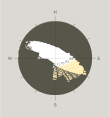
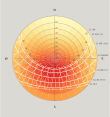
Shading mask
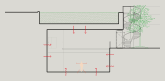
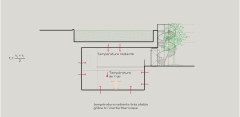
Principle of thermal inertia
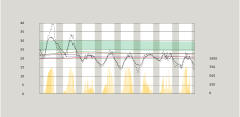
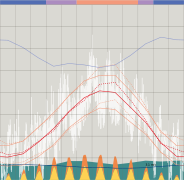
The volumes of La Défense are buried underground, meaning that the floor and walls are in contact with the ground. Also, the structure which is apparent both in the floor, the roof and walls is made of concrete. Both the ground and concrete bring a substantial amount of thermal inertia, which maintains radiant temperatures almost constant throughout the seasons. This effect stabilises air temperature and even more the thermal sensation. The deeper the spaces, the more stable the temperature throughout the year.