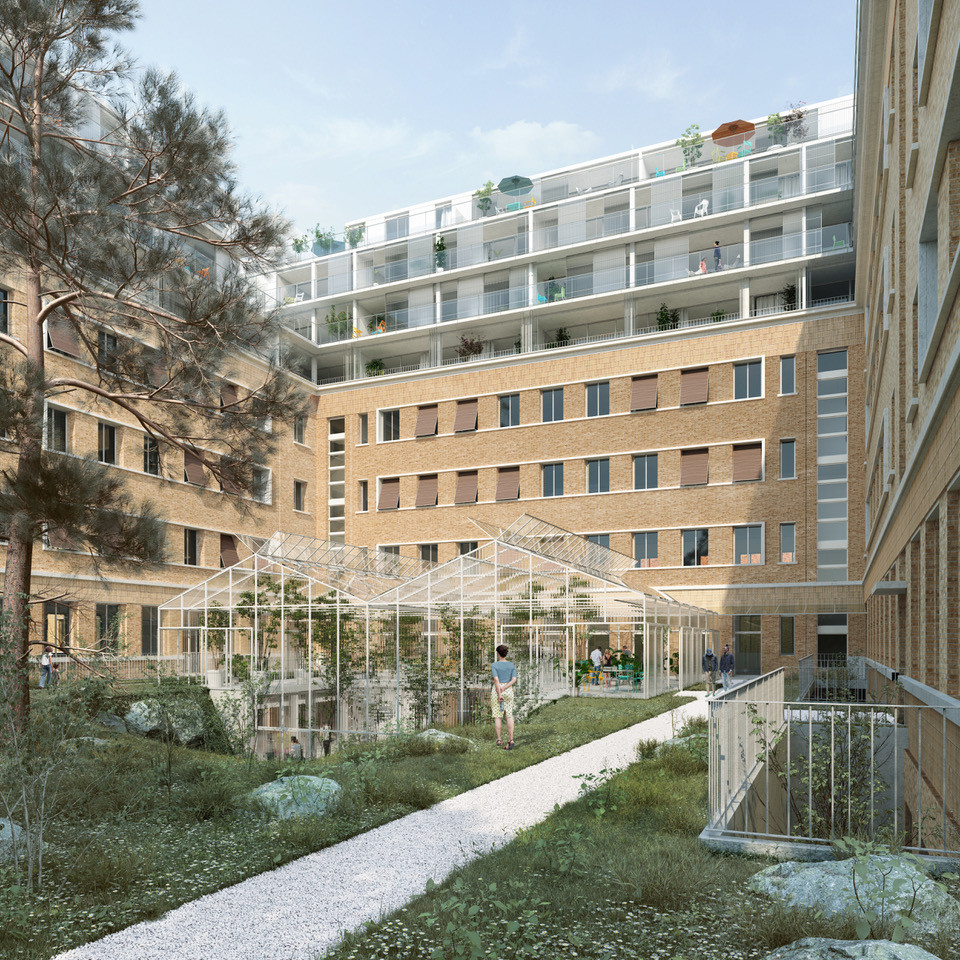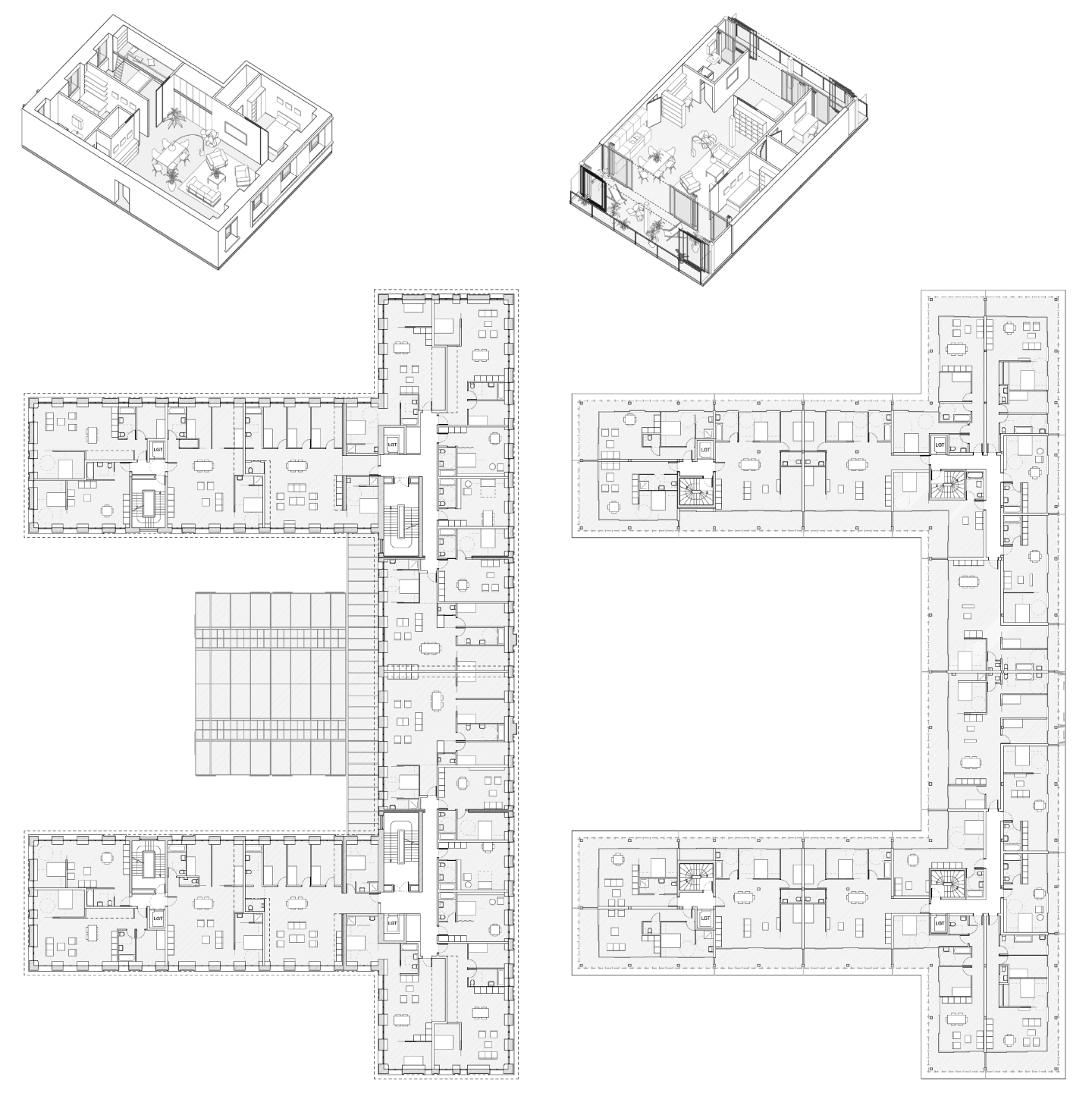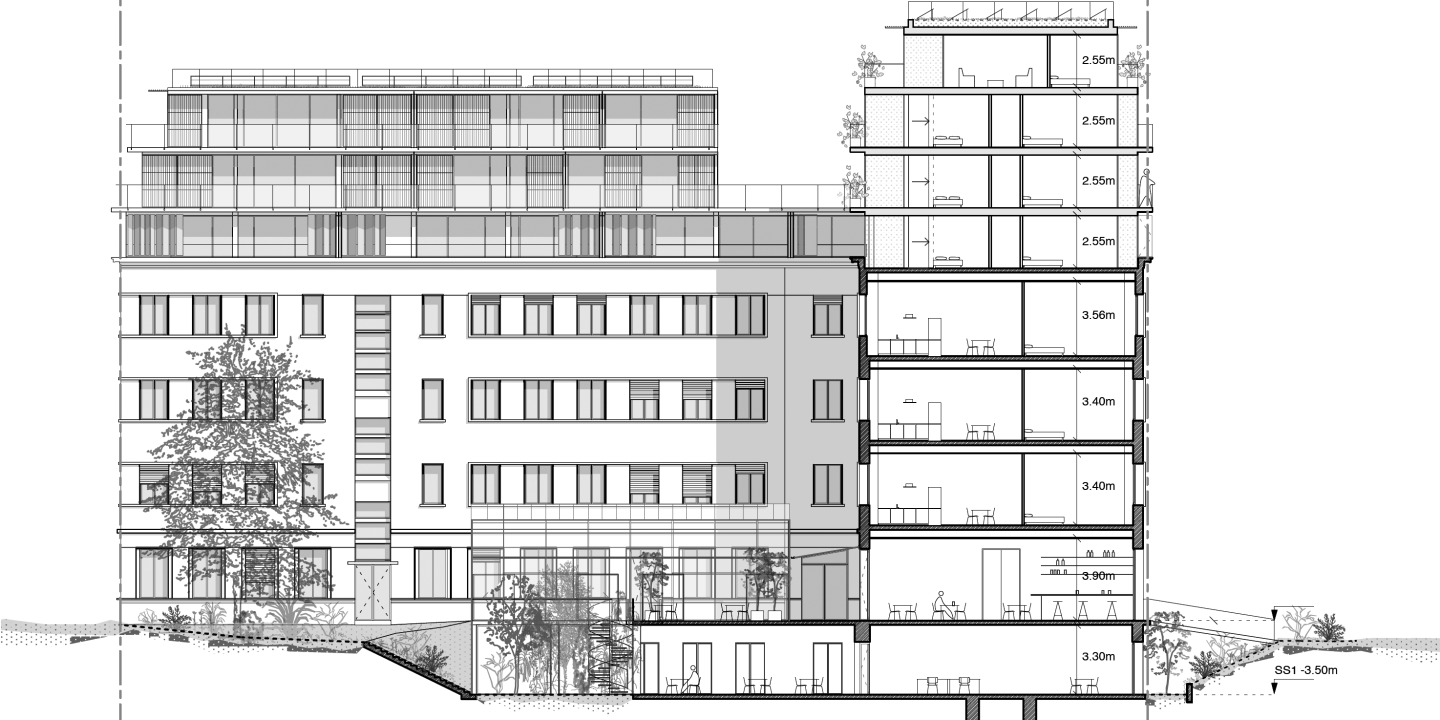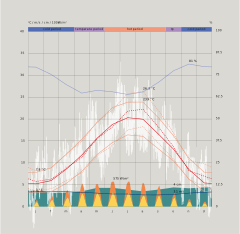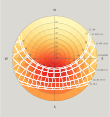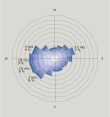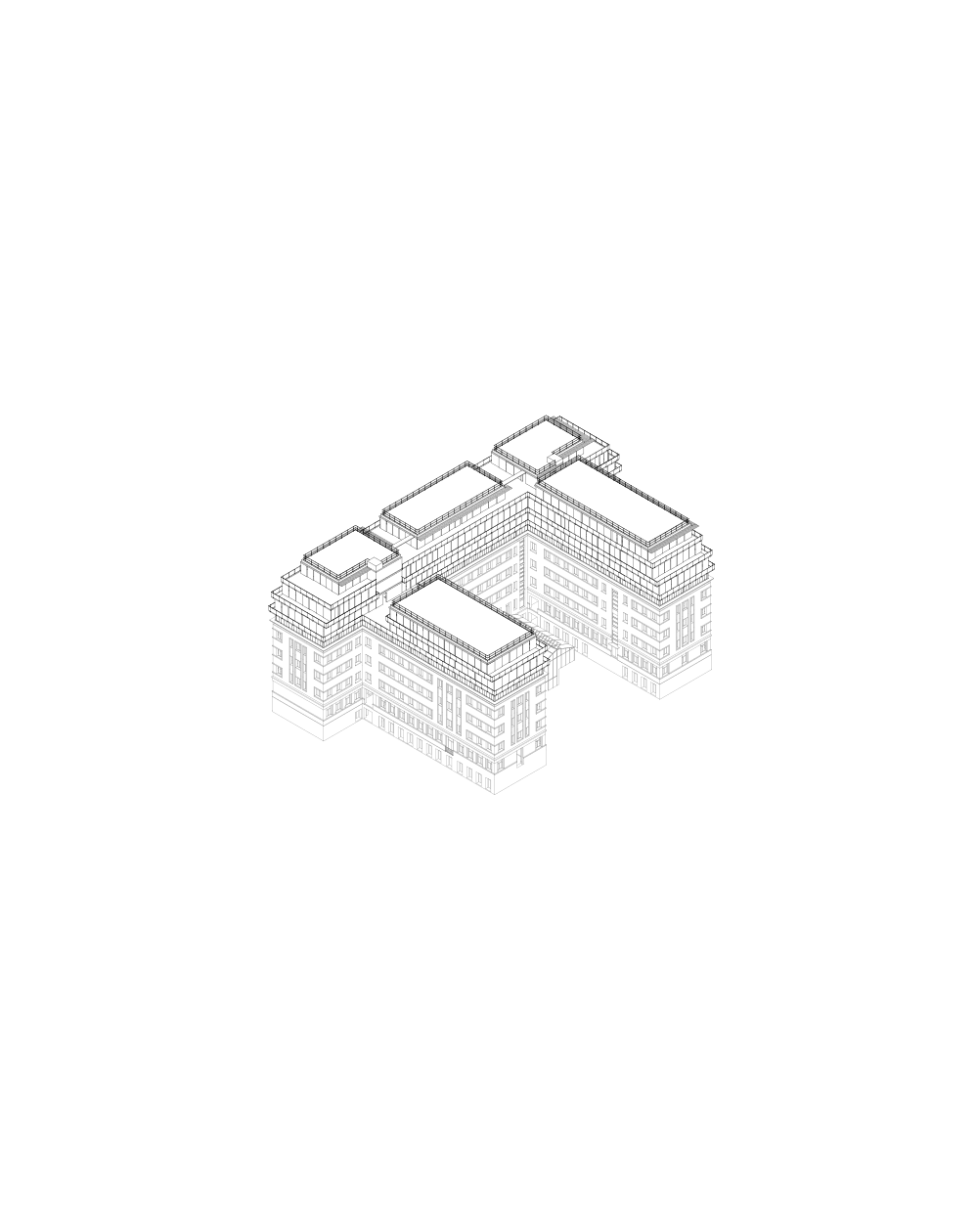
The project of the Lelong building in Saint Vincent de Paul consists of the refurbishment and transformation of an old hospital into a residential building with an extension of 4 new levels. The main energy requirement of a residential building in Paris is space heating, which can be offset to a large extent by passive solar heating. The lower levels receive less sun and keep a standard window-to-floor ratio, whereas the upper levels can take full advantage of the sun with a fully transparent double façade system. Winter gardens wrap entirely the building providing a high degree of envelope control: they mitigate heat loss, allow maximum solar gains, daylight and views, reduce infiltration, pre-heat the air for renewal, reduce wind pressure on the façade and provide an enjoyable outdoor space for the summer. In order to determine precisely all these benefits and the actual behaviour of winter gardens, a research project was carried out with Lacaton&Vassal in previous built work.
For this project, the environmental requirements in terms of certification aimed for the PassiveHaus/Enerphit label, the BBCA label and the Bâtiment Biosourcé level 3 label.
Incident solar radiation
-
0
-
140
-
280
-
420
-
560
-
700
Solar radiation represents the solar heat each glazed surface receives throughout the year.


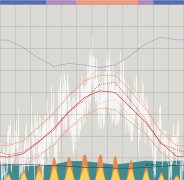
Hours of direct sun a day across the seasons
-
0
-
1
-
2
-
3
-
4
-
5
-
6
-
7
-
8
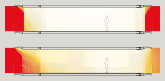
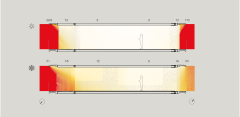
Interior solar radiation
-
0
-
20
-
40
-
60
-
80
-
100
Indoor solar radiation represents the solar heat the room receives through the summer and winter periods