MainSilhouetteArtboard 1
Artboard 1
Chateau Lafite_Axo_silhouette
Artboard 3
Artboard 1
Artboard 3
Ghent_Axo_silhouette
GL Pau_Axo_silhouette-01
EMVS_Axo_silhouette
Ministerio_Axo_silhouette
Hamburg_Axo_silhouette
Cafferata_Axo_silhouette
Halle bioclimatique_Axo_silouhette-small
Palenque_Axo_silhouette
Crystal Palace_Axo_silhouette
Carriego_Axo_silhouette
Carriego Library
Buenos Aires, Argentina
Ministry of Urban Development of the City of Buenos Aires
MDU / Martín Torrado
2017
135 m²
Renovation
Cultural
Unbuilt project

A desirable environmental quality for a reading room of a library could be to have generous, natural and diffuse light that does not produce glare. Buenos Aires has a particularly strong sun, especially during the summer, which can not only induce visual discomfort to the users, but also add excessive heat indoors and in this case, it can also rapidly deteriorate the old books. The large window facing north exposed the stored books and reading table to the direct sun for at least 8 hours a day during summer and the mid-season, which induced all the above-mentioned problems. The simple modification of the glazing properties for a frosted and less transmissive glass provided the space with diffuse light, eliminated the degradation issue and reduced the heat gained inside the room. A slight modification in window opening allowed to cross-ventilate more effectively.

Interior solar radiation

significant radiation
r
excessive radiation
  • 0
  • 20
  • 40
  • 60
  • 80
  • 100
kWh/m²

Solar radiation adds heat to the room and light intensity, which degrades sensitive objects faster and produces glare to read.


Shading mask of the north facing window

harmful sun
s
beneficial sun
s
shaded proportion of the sky vault
proportion of the sky vault covered by trees

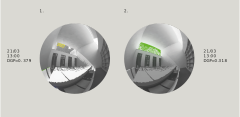
Daylight Glare Probability before and after intervention
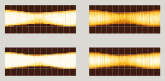
< 0.35 = Imperceptible
0.35 < DGP < 0.4 Perceptible
0.4 < DGP 0.45 = Disturbing
> 0.45 = Intolerable

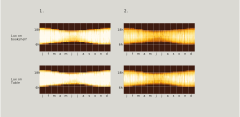
Lux levels

  • 0
  • 50
  • 100
  • 150
  • 200
  • 250
  • 300
  • 600
  • 1200
  • 2000
lux

Cumulated lux are an indication of how fast sensitive objects will degrade. The less amount of cumulated lux, the longer objects last in time.
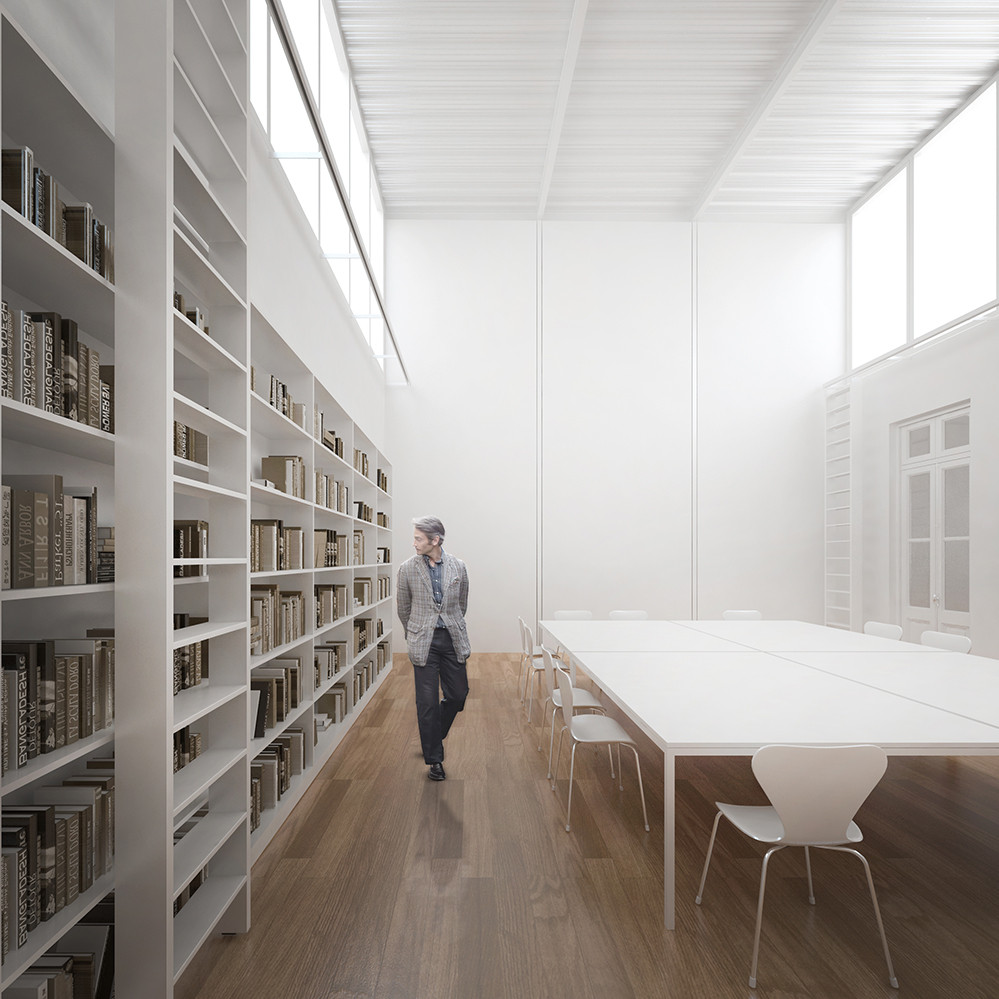
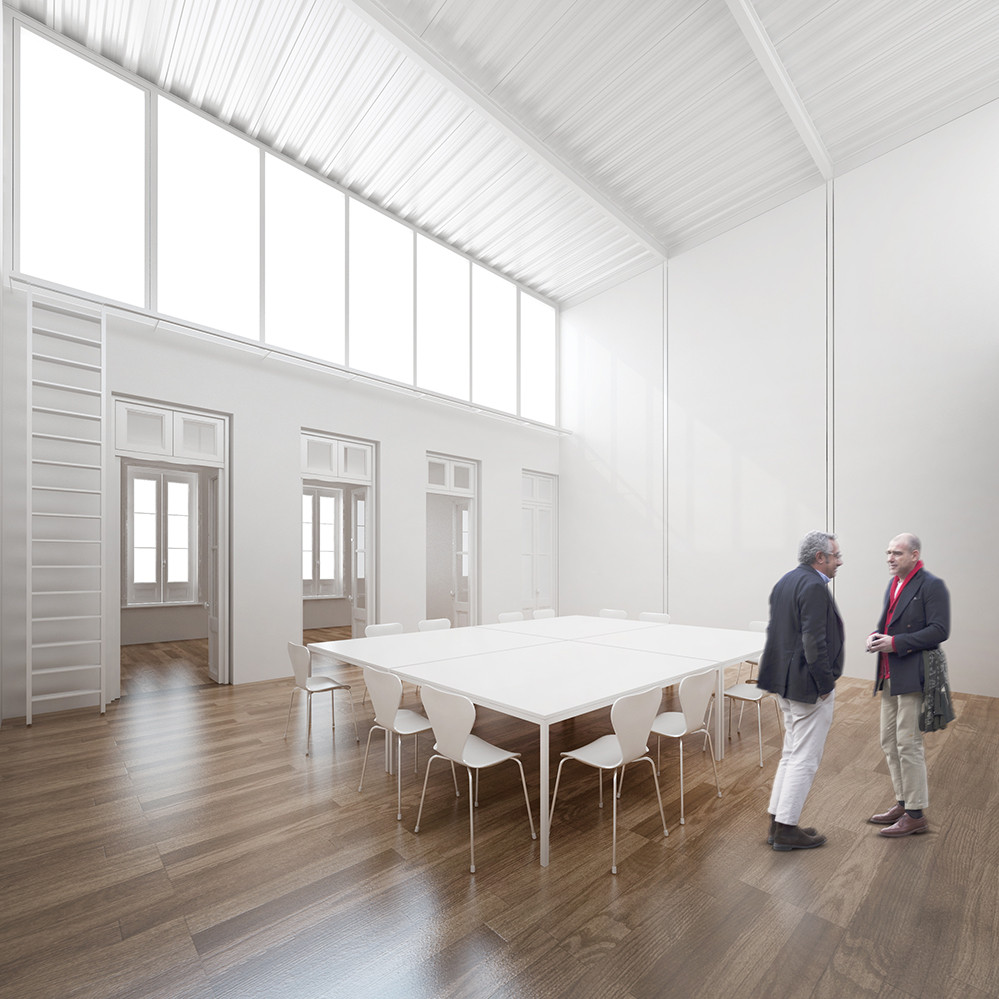
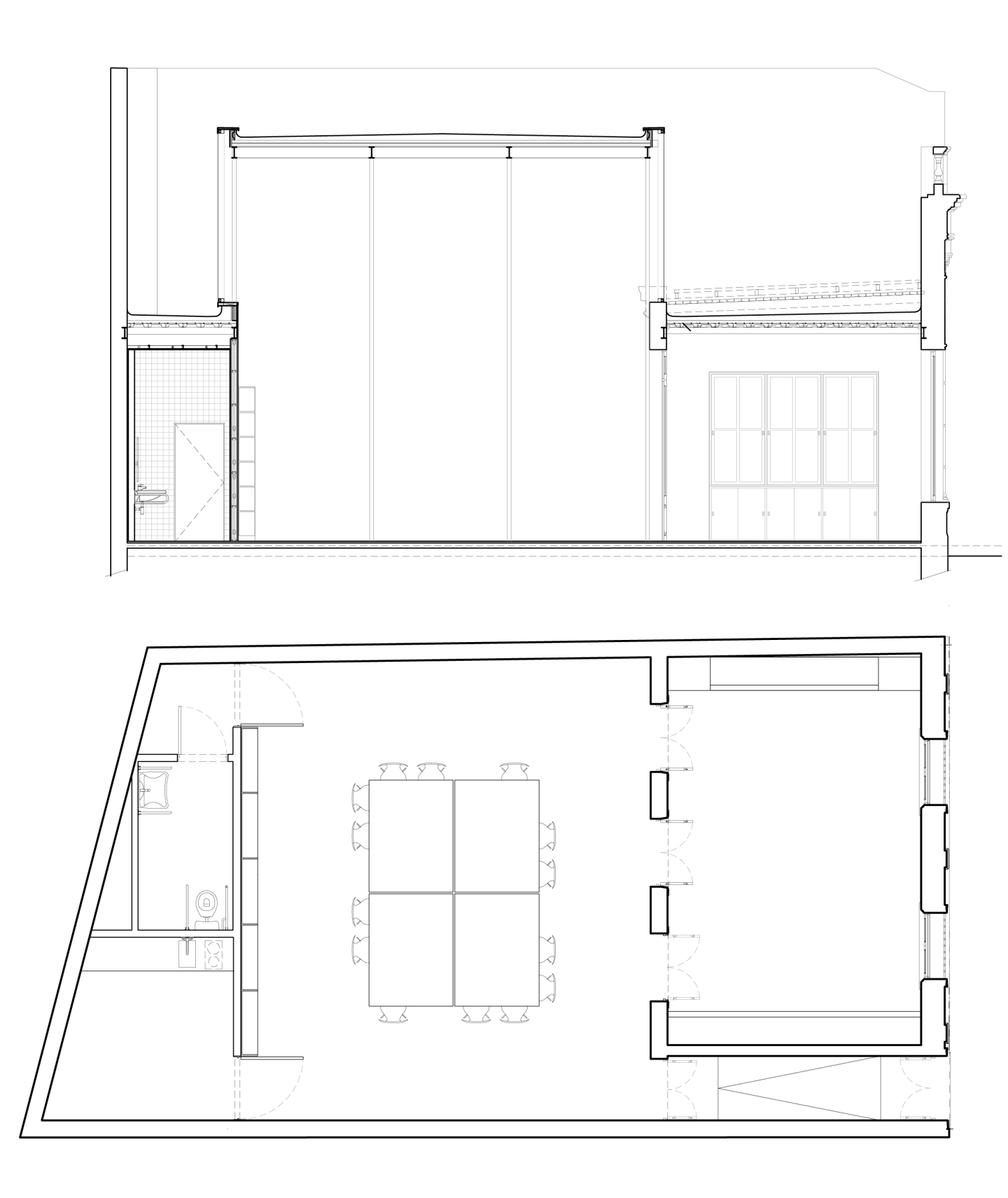
“The project consists of the refurbishment of the Carriego Library, the residence of the young poet Evaristo Carriego (1883 – 1912). Located in the historic neighbourhood of Palermo, the project aims to regain the identity of the historic period buildings, rescuing the patio as a structuring argument of the traditional chorizo ​​house, through the incorporation of a seven meter high central area which serves as both a reading spot and a multipurpose space. The original library, until the moment of its partial demolition, had a surface area of ​​95 m2. The project proposes to preserve the areas of the house that have not yet been demolished: the front room and the hall itself, which maintains the original wall and floor finishings. The central area acquires the characteristics of a multipurpose covered patio –with double height– intended for the different promoted activities and that at the same time is the central reading room, with an equipped library for this purpose. An upper clerestory will guarantee natural lighting.”
MDU

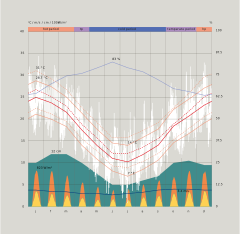
The climate of Buenos Aires is Temperate, Humid Subtropical (Cfa) in the Koppen Geiger category. Summers are hot and rainy, with a very high proportion of direct radiation, which, added to the high temperatures, generates a great need for solar control. During a large part of the summer the temperature is pleasant, which allows buildings to work passively with an adequate natural ventilation strategy and effective solar protection. Winters are mild as temperatures rarely drop below 5ºC, and solar radiation is significant, even during the coldest months. These conditions allow not to require heating on sunny winter days. The climate calls for special attention to bioclimatic strategies: even though it offers good potential due to the very strong sun, in summer buildings can overheat very easily; and in winter, the need for heating can be unnecessarily high. In 2050, it is estimated that the temperature will increase by 2.3 ºC in summer.

Climate summary

Average temperature
t
(°C)
Avg. min. and avg. max. temperature
t
(°C)
Relative humidity
w
(%)
Daily diffuse solar radiation
r
(100xW/m²)
Daily total solar radiation
r
(100xW/m²)
Wind speed
a
(m/s)
Monthly precipitations
w
cm
Daily range
t
(°C)
Temperature predictions for 2050
t
(°C)

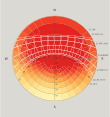
Sun path

Solar altitude
s
  • 0
  • 240
  • 480
  • 720
  • 960
  • 1200
kWh/m2

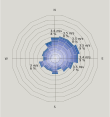
Wind rose

Wind frequency
a
  • 0
  • 1
  • 2
  • 3
  • 4
  • 5
  • 6
  • 7
  • 9
  • 9
  • 10
m/s
Close