MainSilhouetteArtboard 1
Artboard 1
Chateau Lafite_Axo_silhouette
Artboard 3
Artboard 1
Artboard 3
Ghent_Axo_silhouette
GL Pau_Axo_silhouette-01
EMVS_Axo_silhouette
Ministerio_Axo_silhouette
Hamburg_Axo_silhouette
Cafferata_Axo_silhouette
Halle bioclimatique_Axo_silouhette-small
Palenque_Axo_silhouette
Crystal Palace_Axo_silhouette
Carriego_Axo_silhouette
Stationstuinen
Ghent, Belgium
Triple Living
OFFICE KGDVS
2020
19700 m²
New built
Mixed use
Studies in development

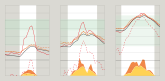
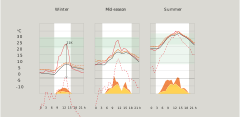
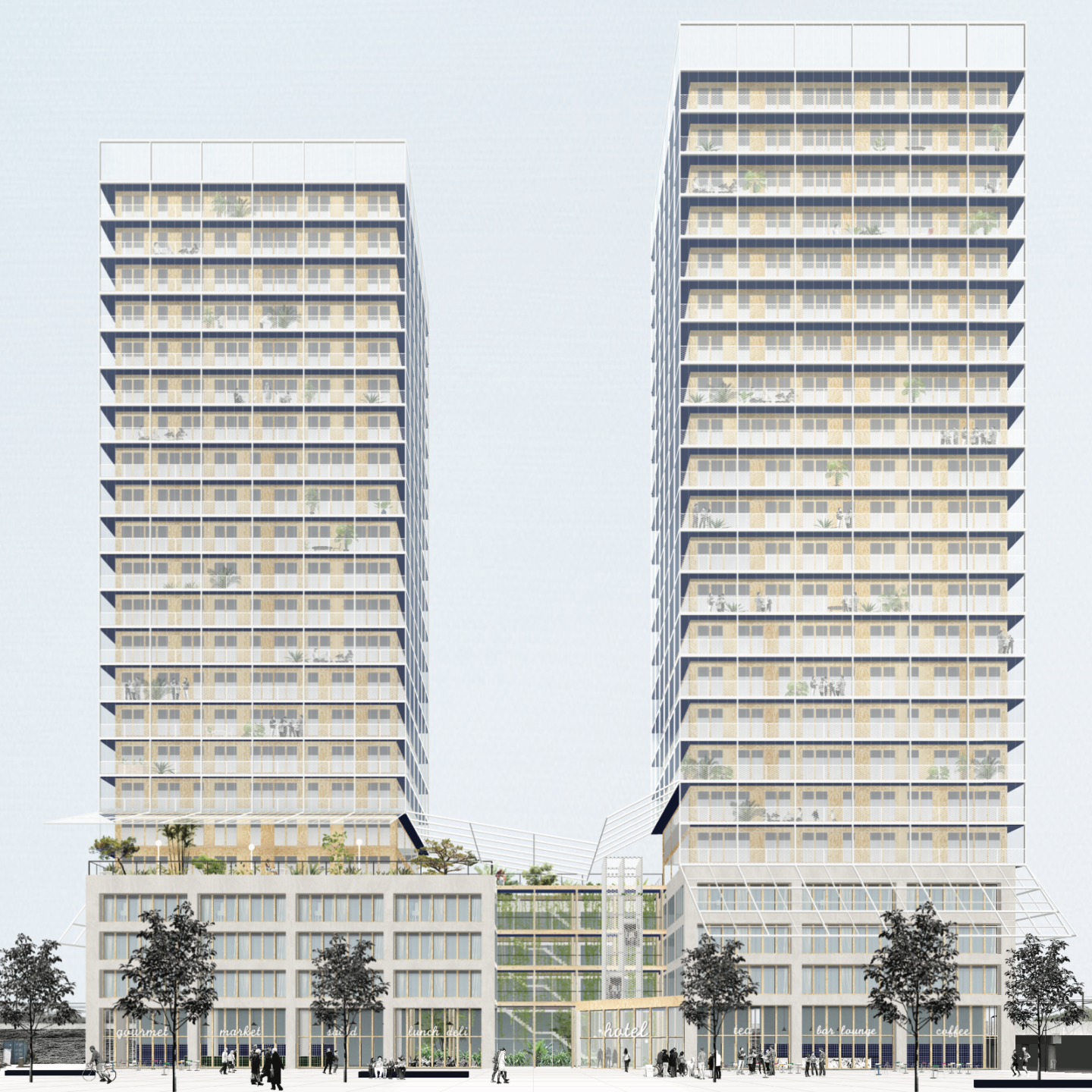
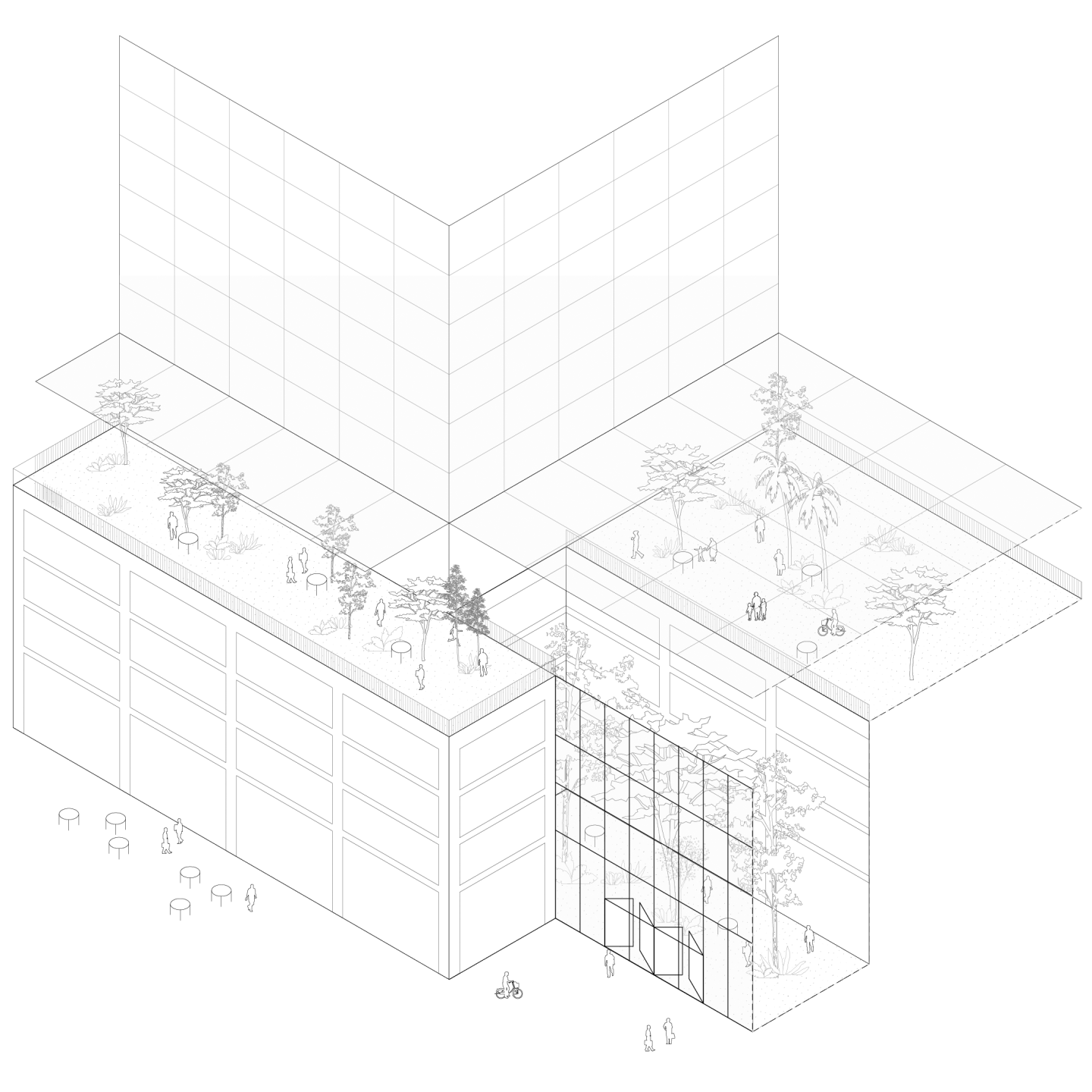
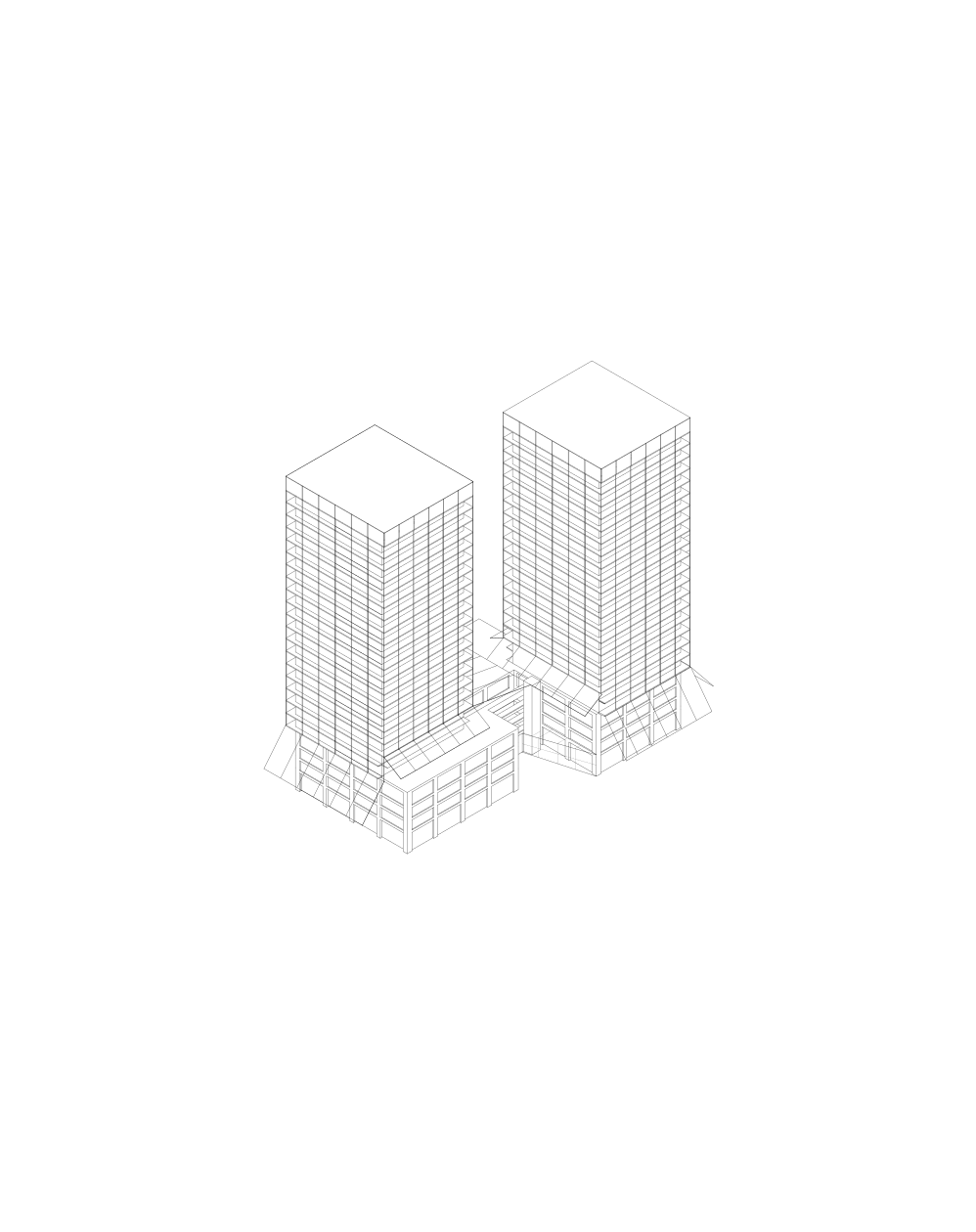
The towers in Ghent are wrapped with a glazed double skin, that creates winter gardens for the residential floors and intermediate spaces for the base. The environmental conditions in these unusual spaces are complex to predict, as they will depend on how closed or airtight the envelope is, the amount of solar heat received and the exposure to winds. Studying the microclimate of these spaces with precision enabled the team to improve the thermal comfort across the year with simple actions, opening more or less to harness sun and wind. The environmental benefits that these spaces provide to the parent building were quantified to valorise their contribution and optimise the project's performance.

Felt temperature

  • 0
  • 8
  • 16
  • 24
  • 32
  • 40
°C

The felt temperature considers air temperature, surface temperatures, solar radiation, wind speed and humidity.
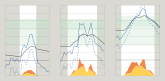
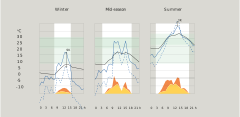
Felt temperature on typical days

outdoor temperature
terrace below canopy basecase
terrace below canopy project
footbridge basecase
footbridge project
courtayrd basecase
courtyard project

The project of the twin towers was initiated on a site where foundations were already built for a former version of this project, as the exact location and dimensions where constrained. They host residential units, a hotel and commercial spaces. The envelope is wrapped on a double skin that acts a as a winter garden on the typical floors and as a wind and rain protection on the intermediate spaces.

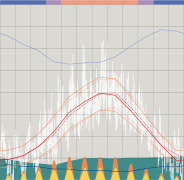
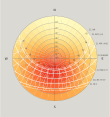
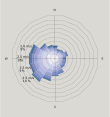
Ghent ́s climate is temperate oceanic, with a cold winter and mild summer. In winter, temperatures are low with an average of 5ºC in January. The sky is mainly overcast with a very low proportion of sunny days; radiation is rather low and mainly diffuse. On milder days, warmer afternoon temperatures can increase up to 13ºC whereas during the coldest days, temperatures remain below freezing and can reach -5ºC. During summer, the average temperature reaches only 19ºC in July with an average high of 23ºC, and moderate radiation. The sky is mainly overcast, though solar radiation can be high. During peak days, temperature can reach some 28ºC, but mornings remain below 20ºC. An ample diurnal amplitude points to the use of thermal mass as a cooling strategy, most effective when combined with natural ventilation at night. The latitude is 51° N: the highest sun has an altitude of 62º, whereas in winter the highest solar altitude remains around 16º. Wind speed is relatively high and constant through the year, with an average of 3.6 m/s. Prevailing winds throughout the year come mainly from south-west.

Climate summary

Average temperature
t
(°C)
Avg. min. and avg. max. temperature
t
(°C)
Relative humidity
w
(%)
Daily diffuse solar radiation
r
(100xW/m²)
Daily total solar radiation
r
(100xW/m²)
Wind speed
a
(m/s)
Monthly precipitations
w
cm
Daily range
t
(°C)
Temperature predictions for 2050
t
(°C)

Sun path

Solar altitude
s
  • 0
  • 240
  • 480
  • 720
  • 960
  • 1200
kWh/m2

Wind rose

Wind frequency
a
  • 0
  • 1
  • 2
  • 3
  • 4
  • 5
  • 6
  • 7
  • 8
  • 9
  • 10
m/s
Close