MainSilhouetteArtboard 1
Artboard 1
Chateau Lafite_Axo_silhouette
Artboard 3
Artboard 1
Artboard 3
Ghent_Axo_silhouette
GL Pau_Axo_silhouette-01
EMVS_Axo_silhouette
Ministerio_Axo_silhouette
Hamburg_Axo_silhouette
Cafferata_Axo_silhouette
Halle bioclimatique_Axo_silouhette-small
Palenque_Axo_silhouette
Crystal Palace_Axo_silhouette
Carriego_Axo_silhouette
Housing in Paloma Viertel
Hamburg, Germany
Lacaton&Vassal
Lacaton&Vassal
2019
5044 m²
New built
Collective housing
Studies in development

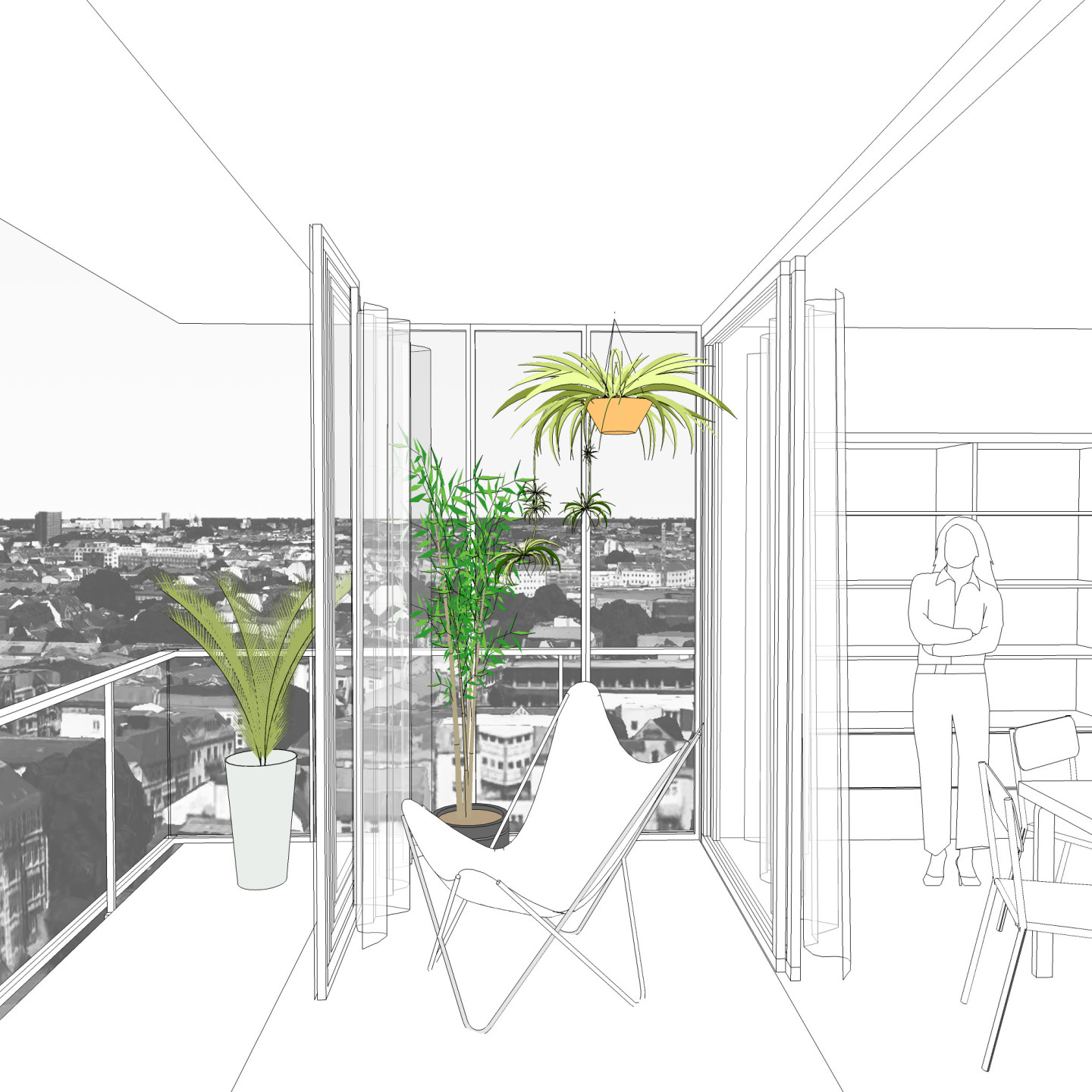
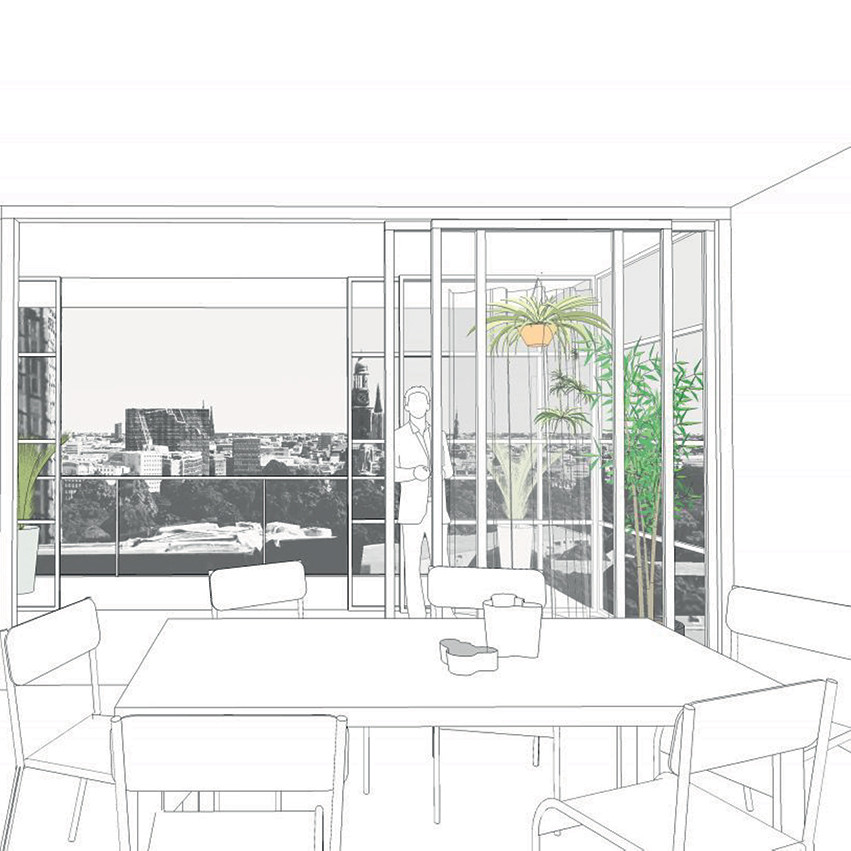
In the cold winters of Hamburg, fresh air provision can become energy intensive, even for residential buildings. The standard projects of today use a double flux system, providing fresh air and extracting it through mechanical means. This is more energy intensive than natural means, but has the advantage of recirculating the air, which reduces the heating load. One of the main assets of Lacaton & Vassal´s winter gardens is that the outdoor incoming air is naturally pre-heated, as the winter garden functions as a buffer space. This eliminates the need for a double flux system as it does the same task although naturally, it frees up the space needed for the machinery and is also cheaper. However, the simplified calculation methods of the German regulations do not allow to easily valorise this passive feature. A detailed calculation of the buffer effect of the winter garden in each orientation and of the resulting heating load per apartment allowed to valorise its qualities.

Heating demand

15 very low heating demand
e
  • 0
  • 5
  • 10
  • 15
  • 20
  • 25
  • 30
  • 35
  • 40
  • 45
  • 50
kWh/m²

The heating demand represents the energy that the space requires to elevate its temperature to the setpoint (20ºC), regardless of the equipment type.
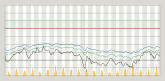
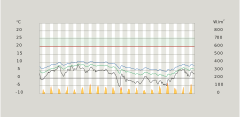
Winter garden temperature

Primary axis: temperatures
t
ºC
exterior
west facing winter garden (central)
east facing winter garden (central)
comfort band (EN15251)
Secondary axis: solar radiation
r
W/m²
diffuse radiation
direct radiation
nighttime

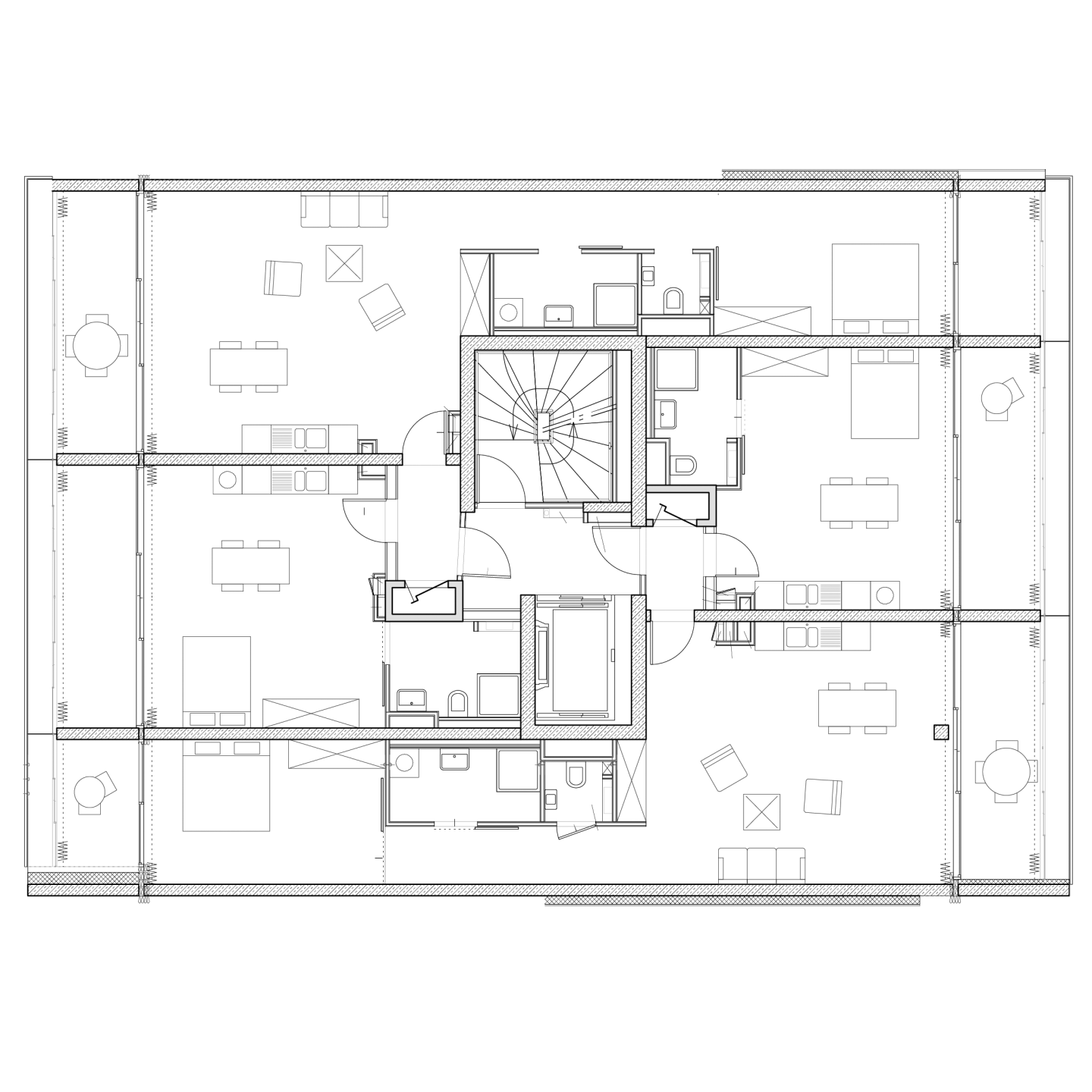
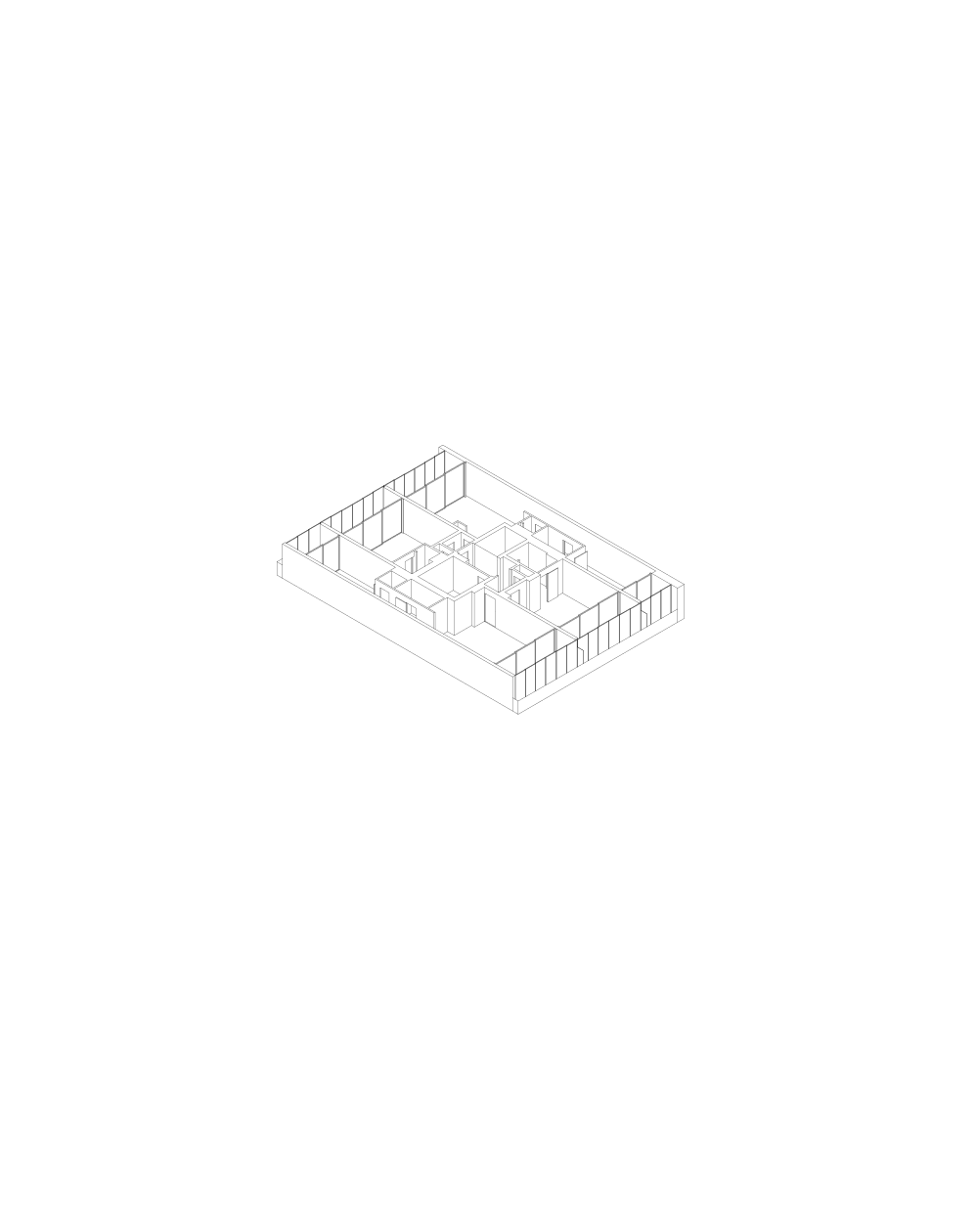
This building of collective housing is a part of a new block in Spielbudenplatz, Hamburg. The project integrates winter gardens in all orientations that are exposed.

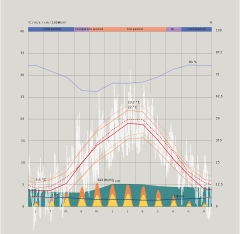
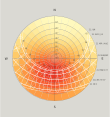
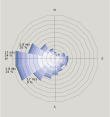
Hamburg´s climate is temperate continental. In winter, temperatures are very low with an average of 2ºC in January. Solar radiation is rather low and mainly diffuse. During extreme days, temperature remains below 0 and can reach -10ºC . During summer, the average temperature reaches only 18ºC in July with an average high of 23ºC, and low solar radiation. Hamburg has a latitude of 54° N. In summer, the highest sun inclination reaches 60º, whereas in winter the sun only reaches around 13º altitude. Prevailing winds come from west and south-west during almost 25% of time with an average speed of some 4 m/s, which is fairly high.

Climate summary

Average temperature
t
(°C)
Avg. min. and avg. max. temperature
t
(°C)
Relative humidity
w
(%)
Daily diffuse solar radiation
r
(100xW/m²)
Daily total solar radiation
r
(100xW/m²)
Wind speed
a
(m/s)
Monthly precipitations
w
cm
Daily range
t
(°C)
Temperature predictions for 2050
t
(°C)

Sun path

Solar altitude
s
  • 0
  • 240
  • 480
  • 720
  • 960
  • 1200
kWh/m2

Wind rose

Wind frequency
a
  • 0
  • 1
  • 2
  • 3
  • 4
  • 5
  • 6
  • 7
  • 8
  • 9
  • 10
m/s
Close