MainSilhouetteArtboard 1
Artboard 1
Chateau Lafite_Axo_silhouette
Artboard 3
Artboard 1
Artboard 3
Ghent_Axo_silhouette
GL Pau_Axo_silhouette-01
EMVS_Axo_silhouette
Ministerio_Axo_silhouette
Hamburg_Axo_silhouette
Cafferata_Axo_silhouette
Halle bioclimatique_Axo_silouhette-small
Palenque_Axo_silhouette
Crystal Palace_Axo_silhouette
Carriego_Axo_silhouette
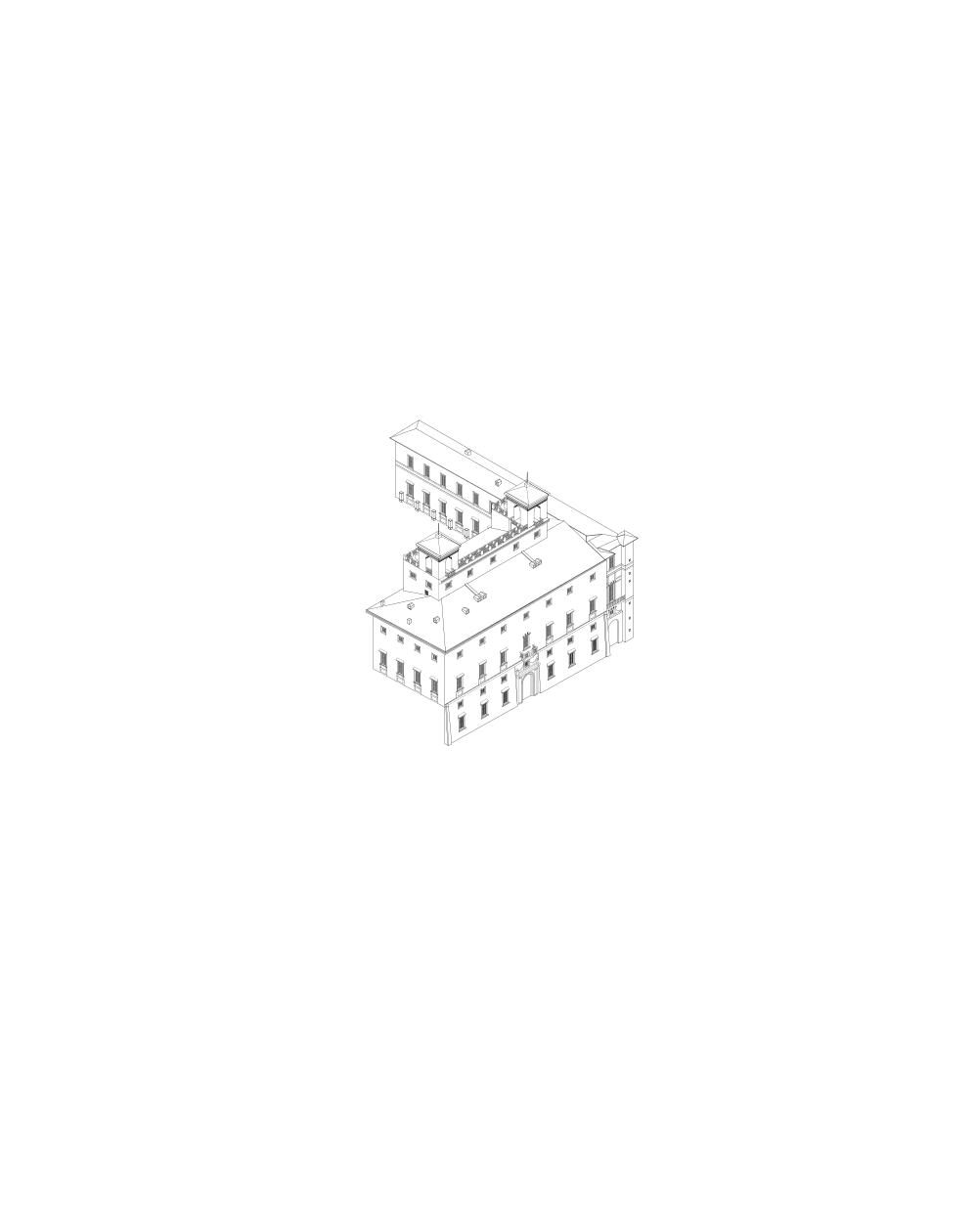
Villa Medici
Rome, Italy
Académie de France
-
2026
266 m²
Space valorization
Cultural
Studies in development

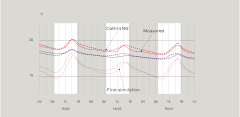
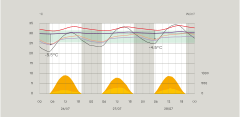
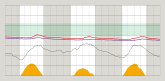
The project aimed to investigate how architecture can provide summer comfort by working with the climate and the building's inherent qualities. A two-week survey and monitoring campaign, conducted in February, taught us about the building fabric and served as a basis to calibrate a dynamic thermal model. The model reached an accuracy of 83–96%, providing a reliable basis for simulating the building envelope and extrapolating climate data for summer conditions. In the current situation, empty and with windows closed, temperatures surpass 30°C day and night throughout the summer months.
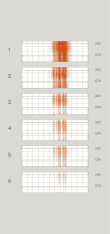
However, the study demonstrated that the Villa's thick masonry, operable windows and solar protection already offer valuable potential to moderate summer temperatures, if operated adequately. Combining proper window operation with simple adaptive measures (external blinds, insect screens to prevent intrusions, existing shutters and curtains) significantly reduced indoor temperatures. Fans can also complement these passive strategies by reducing felt temperature. This approach nearly eliminated overheating, with only some afternoons reaching 27°C indoors, without any air conditioning.

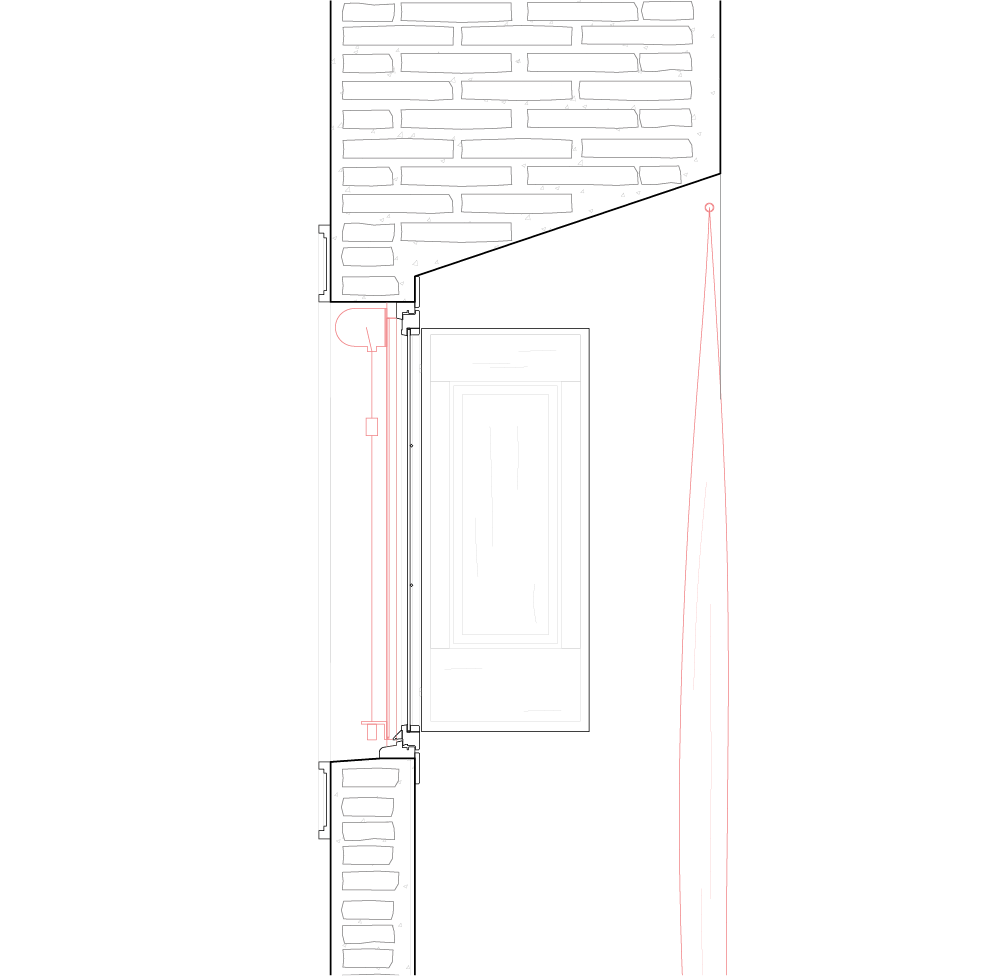
Legend
new interior curtain
original shutters
original window
new mosquito net
new exterior blinds

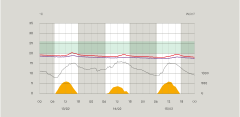
Temperature survey

Outdoor measured temperature
Main room
Secondary room
Adjacent spaces
Thermal comfort (EN 16798)
Global radiation

Model calibration

Measured temperature
Initial temperature calibration
Final temperature calibration
Main room
Adjacent room

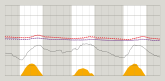
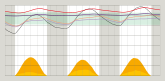
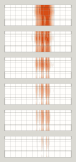
Temperature during summer

Exterior temperature
Current state, empty and with windows closed
Current state, occupied, opening windows at night
Main room
Adjacent room

Progressive reduction of overheating

  • 0
  • 1
  • 2
  • 3
  • 4
  • 5
ºC above 26ºC

1- Current state, empty, with windows closed
2- Current state, with standard window and shading use
3- Current state, optimal use of windows and shading
4- Minimal interventions (addition of insulation below the roof and external shading)
5- Addition of mechanical extraction in the attic
6- Addition of fans
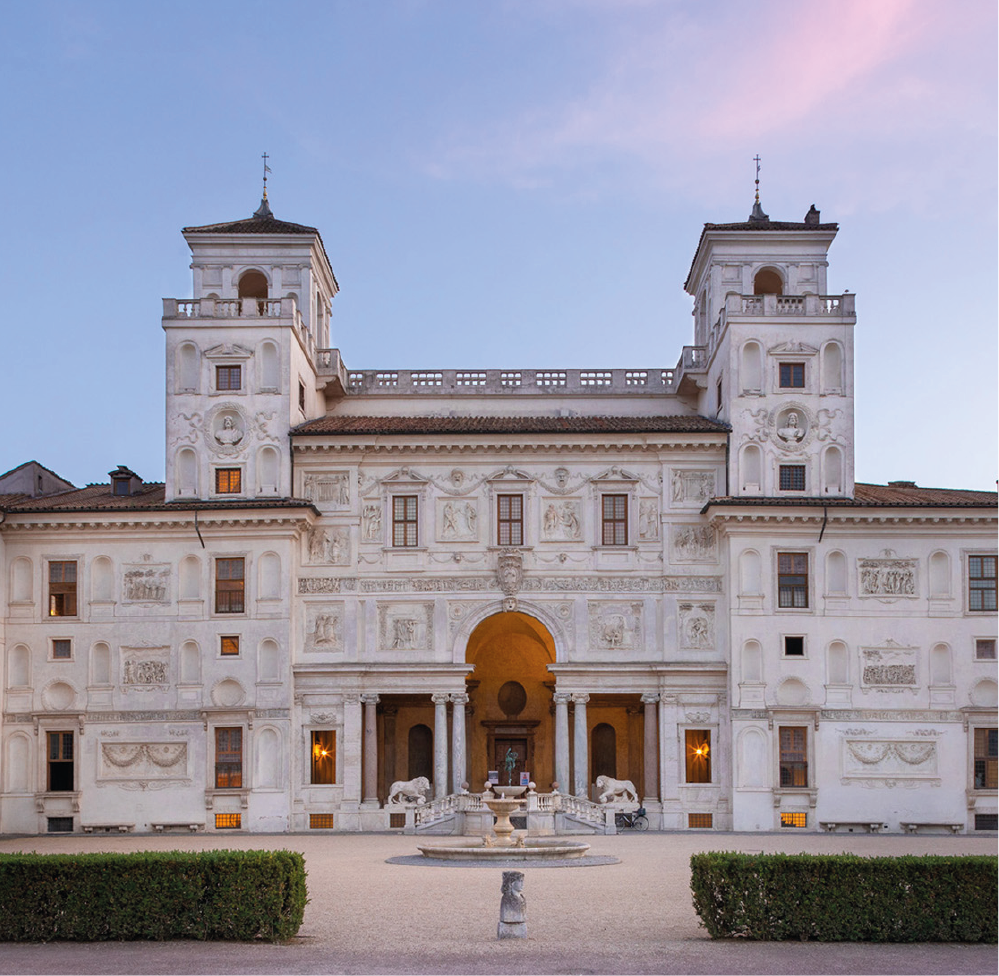
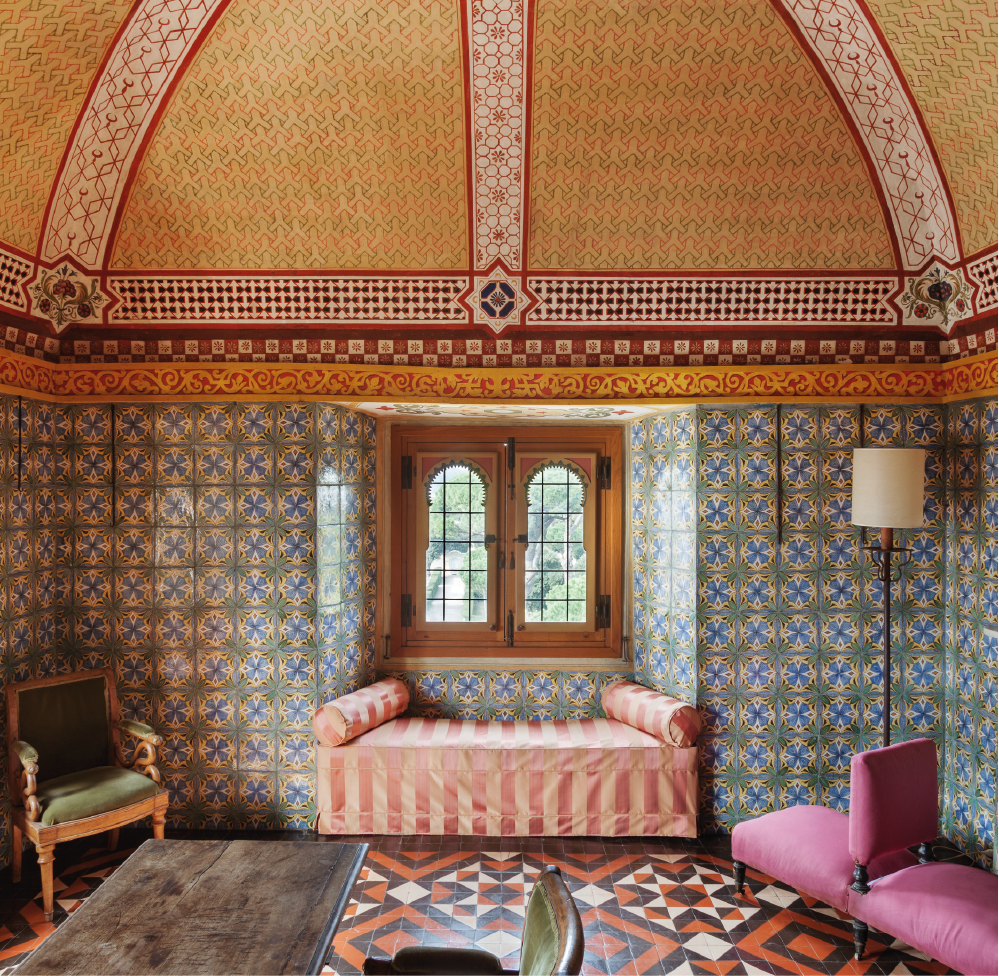
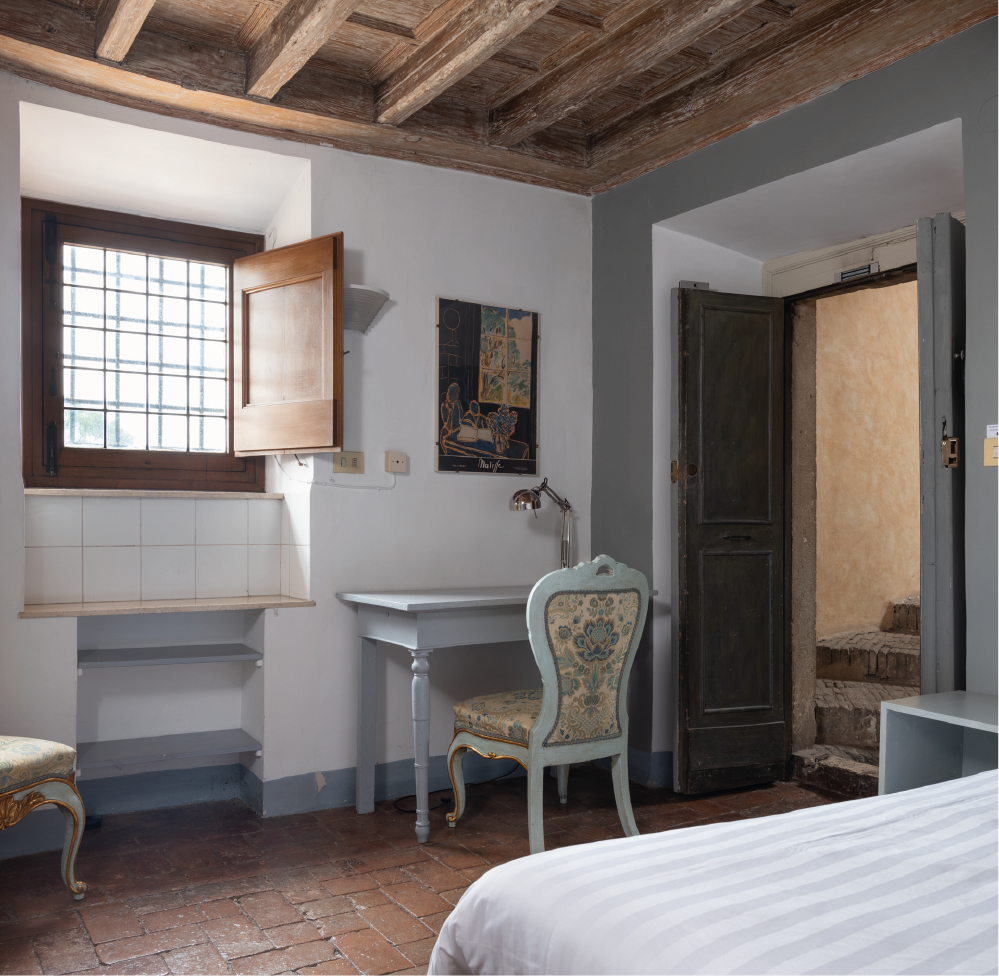
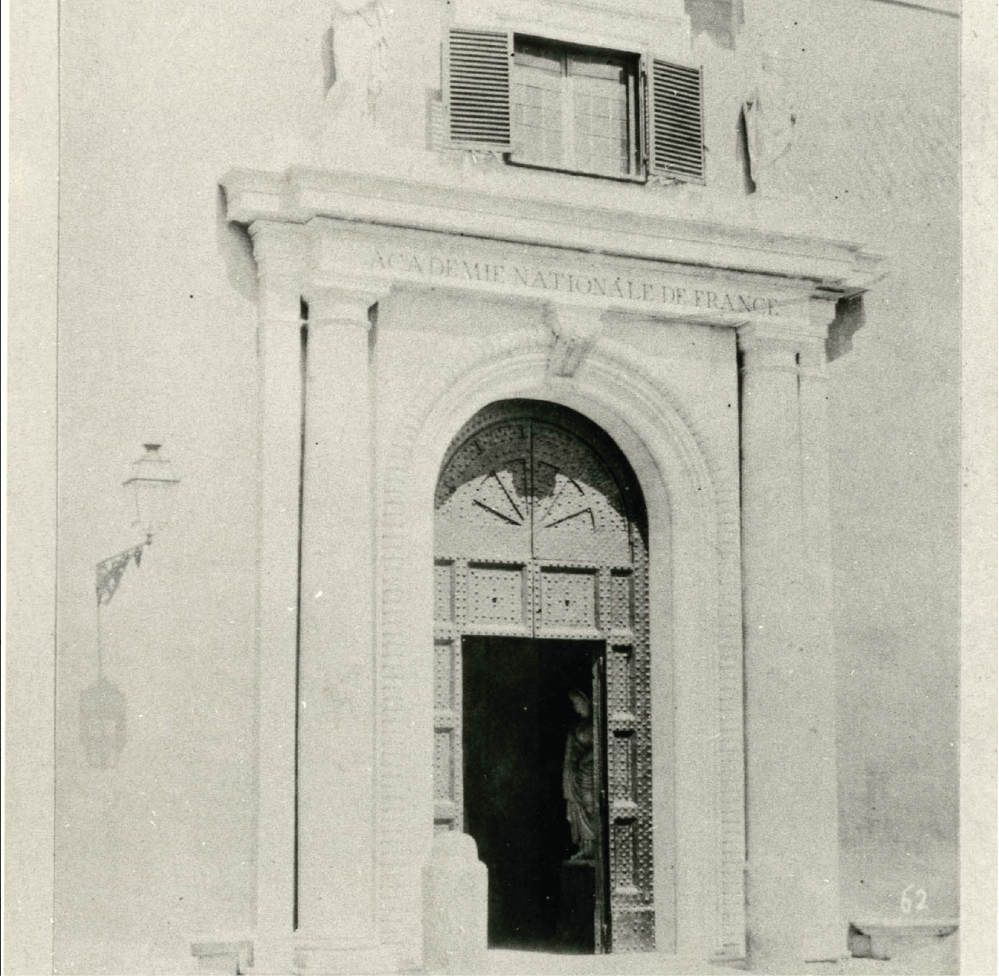
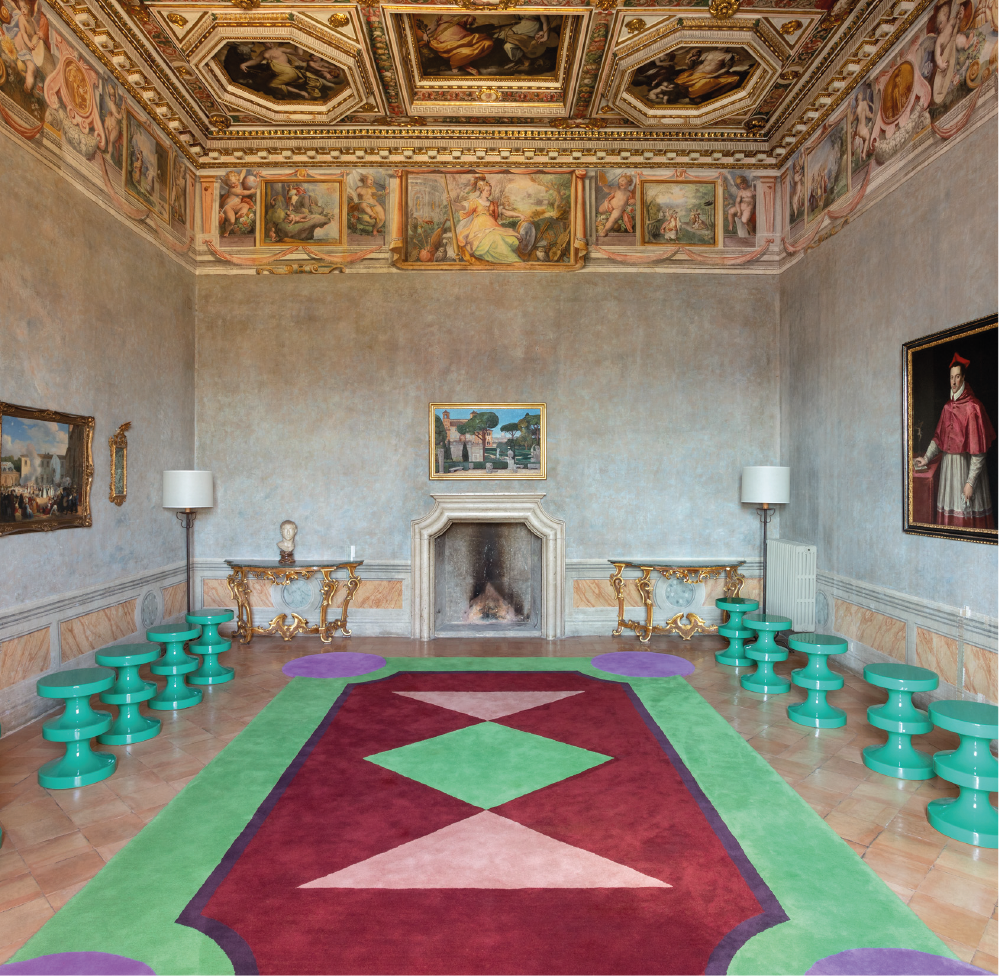
The Villa Medici is a 16th-century Renaissance villa, originally built for Cardinal Ferdinando de' Medici as the Roman residence of the Medici family, close to the papal court. It occupies one of the highest points in Rome's historic centre, on the crest of the Pincian Hill, overlooking the city and enjoying full exposure to sun and wind. In 1803, under Napoleon Bonaparte, the villa became the seat of the French Academy in Rome, a state-sponsored institution for artistic research and education, a role it continues to fulfil today. The rooms of the main building now host guests year-round. On the upper floor, the former attics beneath the roof were progressively converted into bedrooms.

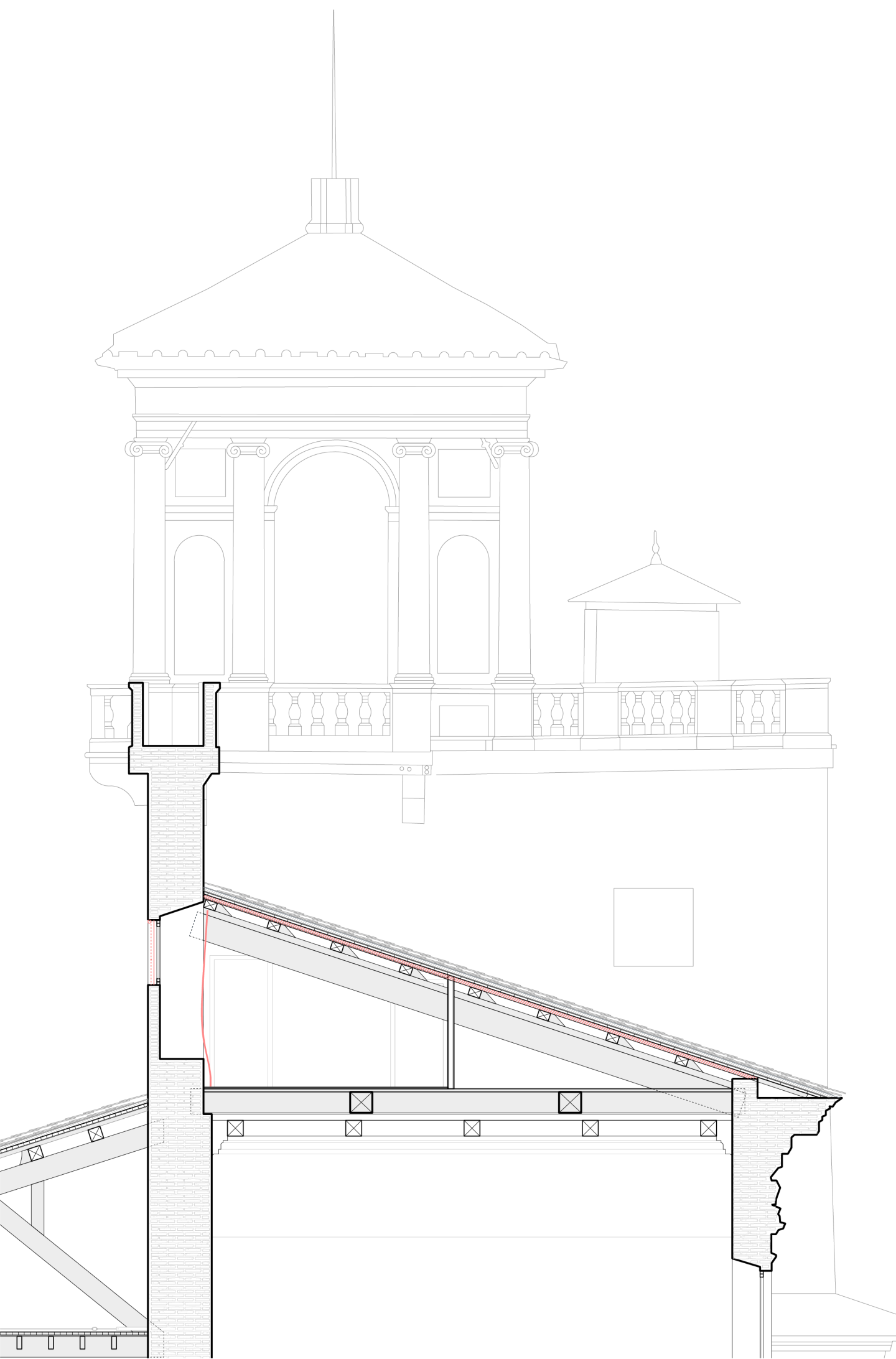
Today, however, these rooms grow too hot in summer. The Academy's question was how to reduce the heat and adapt to increasingly frequent heatwaves without compromising the building's architectural and historical integrity. In a structure that has maintained comfortable conditions for centuries on its own terms, introducing technical systems now calls for careful reassessment. Our proposed intervention draws on the building's inherent qualities, using simple, non-invasive measures to restore its capacity to adapt and to build a new relationship with the climate: external blinds, insect screens, and additional lightweight curtains, complemented by a guide to using the space and other adaptive measures — sleep masks, baldaquin beds, and more.

studies were developed in collaboration with cdlt.

First studied rooms (drawings by cdlt)
Detail of the proposal (drawings by cdlt)

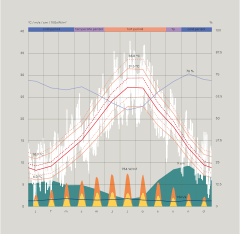
Rome has a Mediterranean climate (Csa), characterised by hot, dry summers, mild winters, and seasonal wind regimes. In summer, the average high temperature is 31.5°C, and temperatures exceed 30°C on most days. Solar radiation is intense, with a predominance of the direct component, as the sky is almost always clear. This also results in relatively low humidity, favouring evaporative cooling to deal with the heat. During this period, the Ponentino brings a gentle westerly sea breeze to the city, generated by the temperature difference between the land and the sea, providing natural cooling in the late afternoon. This is particularly beneficial at the Villa Medici, which occupies one of the two highest points in the city. In winter, temperatures typically range between 8°C and 12°C, although they can fall to around 5°C or rise to 17°C on sunny days. During this season, the Tramontana brings cold, dry air from the north, producing clear but cooler conditions across the city.

Climate summary

Average temperature
t
(°C)
Avg. min. and avg. max. temperature
t
(°C)
Relative humidity
w
(%)
Daily diffuse solar radiation
r
(100xW/m²)
Daily total solar radiation
r
(100xW/m²)
Wind speed
a
(m/s)
Monthly precipitations
w
cm
Daily range
t
(°C)
Temperature predictions for 2050
t
(°C)

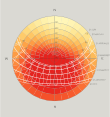
Sun path

Solar altitude
s
  • 0
  • 240
  • 480
  • 720
  • 960
  • 1200
kWh/m2

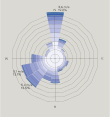
Wind rose

Wind frequency
a
  • 0
  • 1
  • 2
  • 3
  • 4
  • 5
  • 6
  • 7
  • 8
  • 9
  • 10
m/s
Close