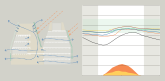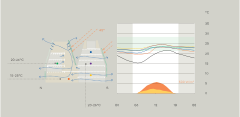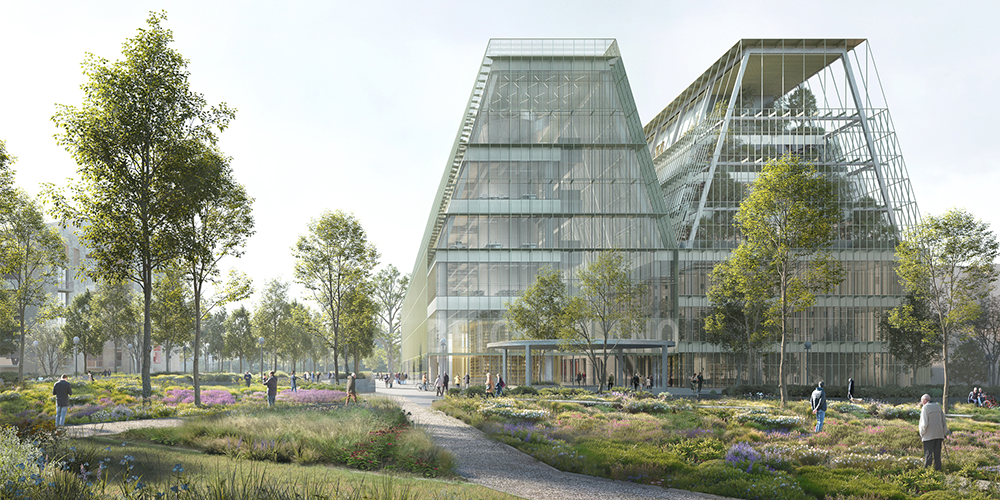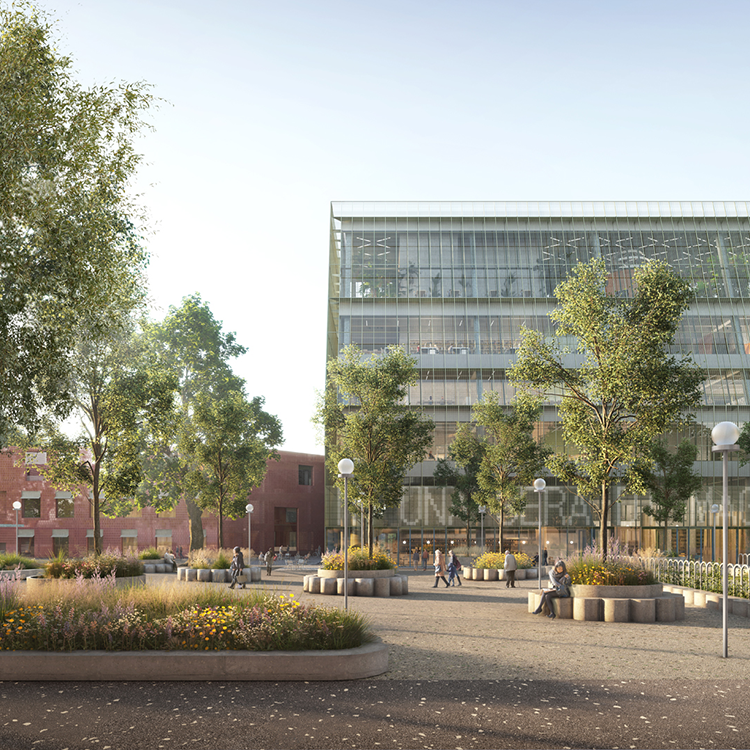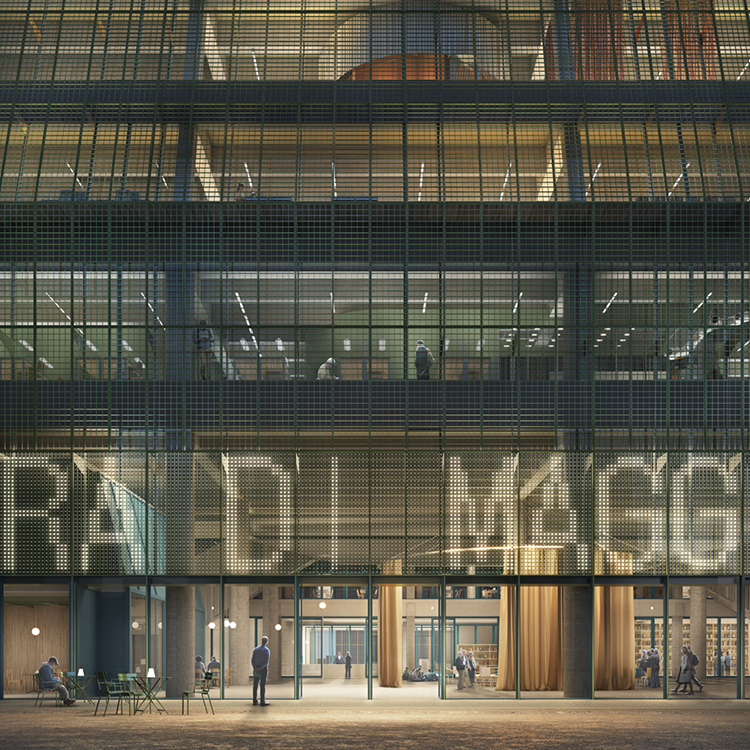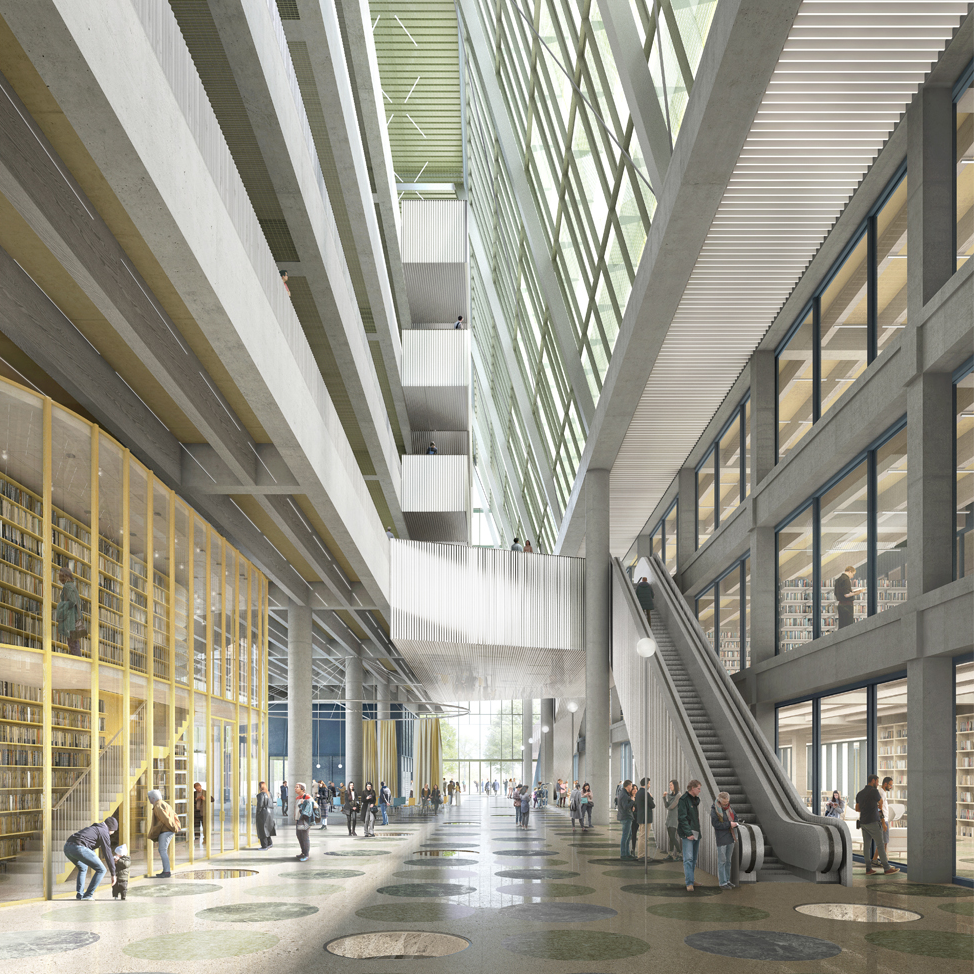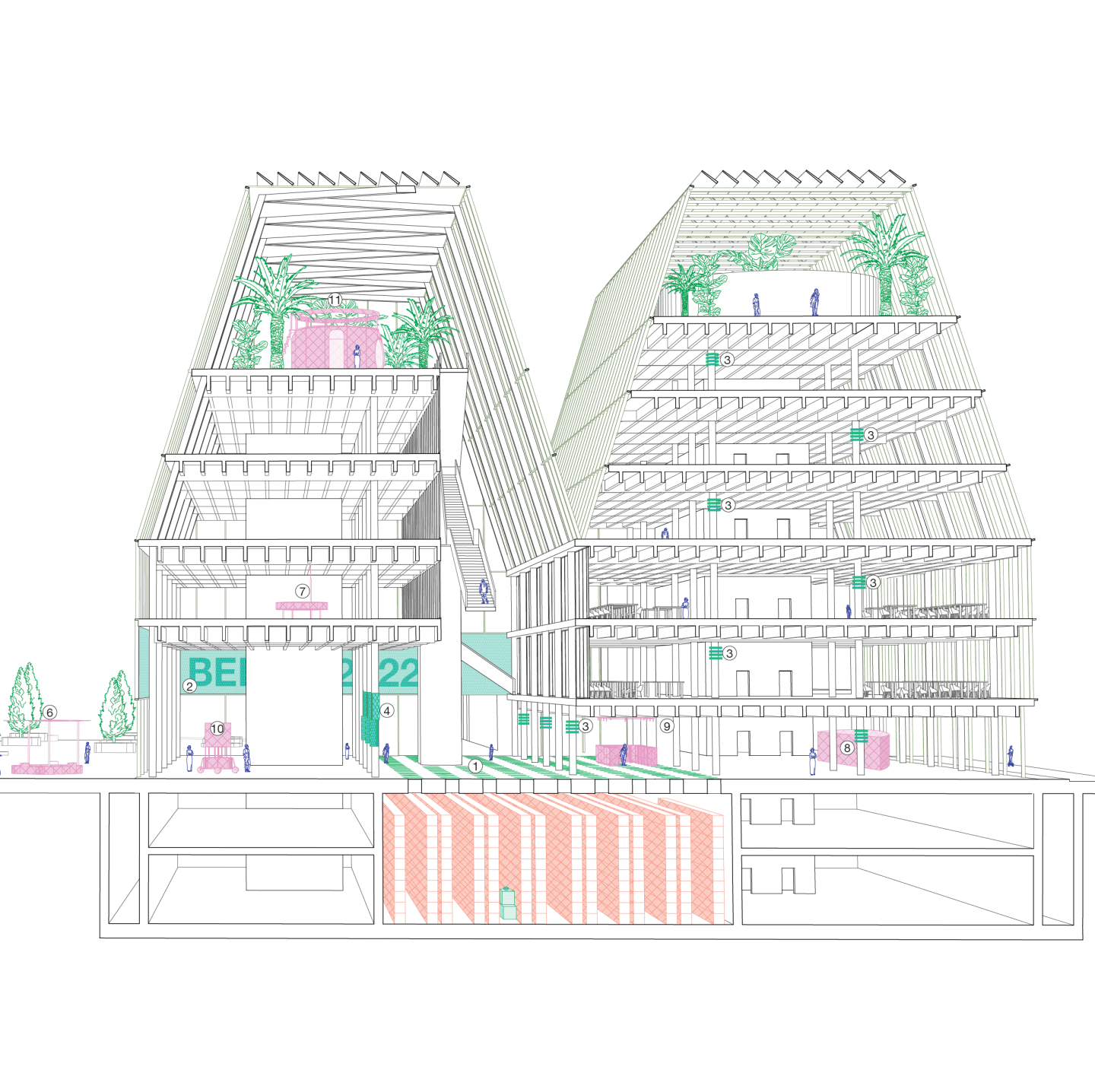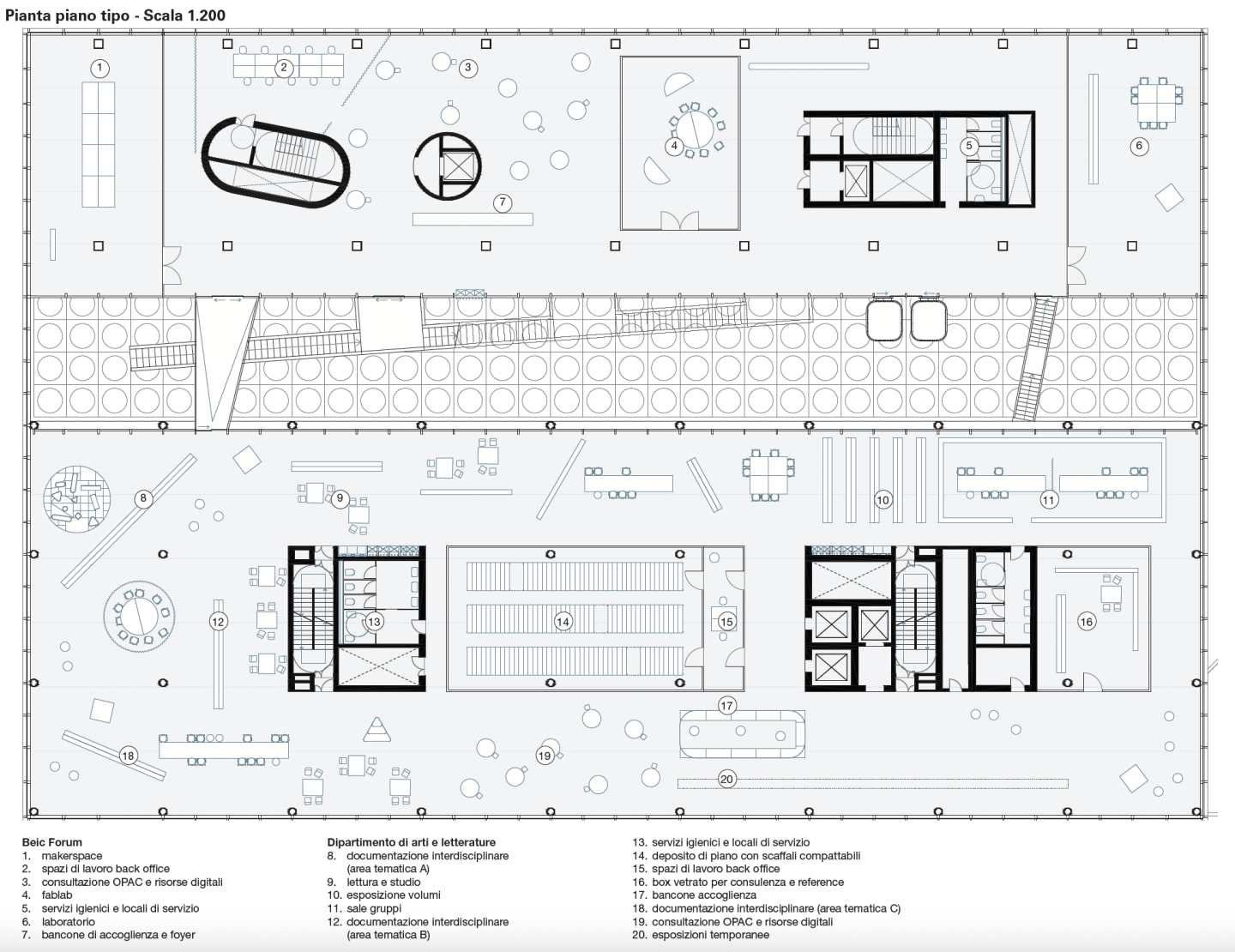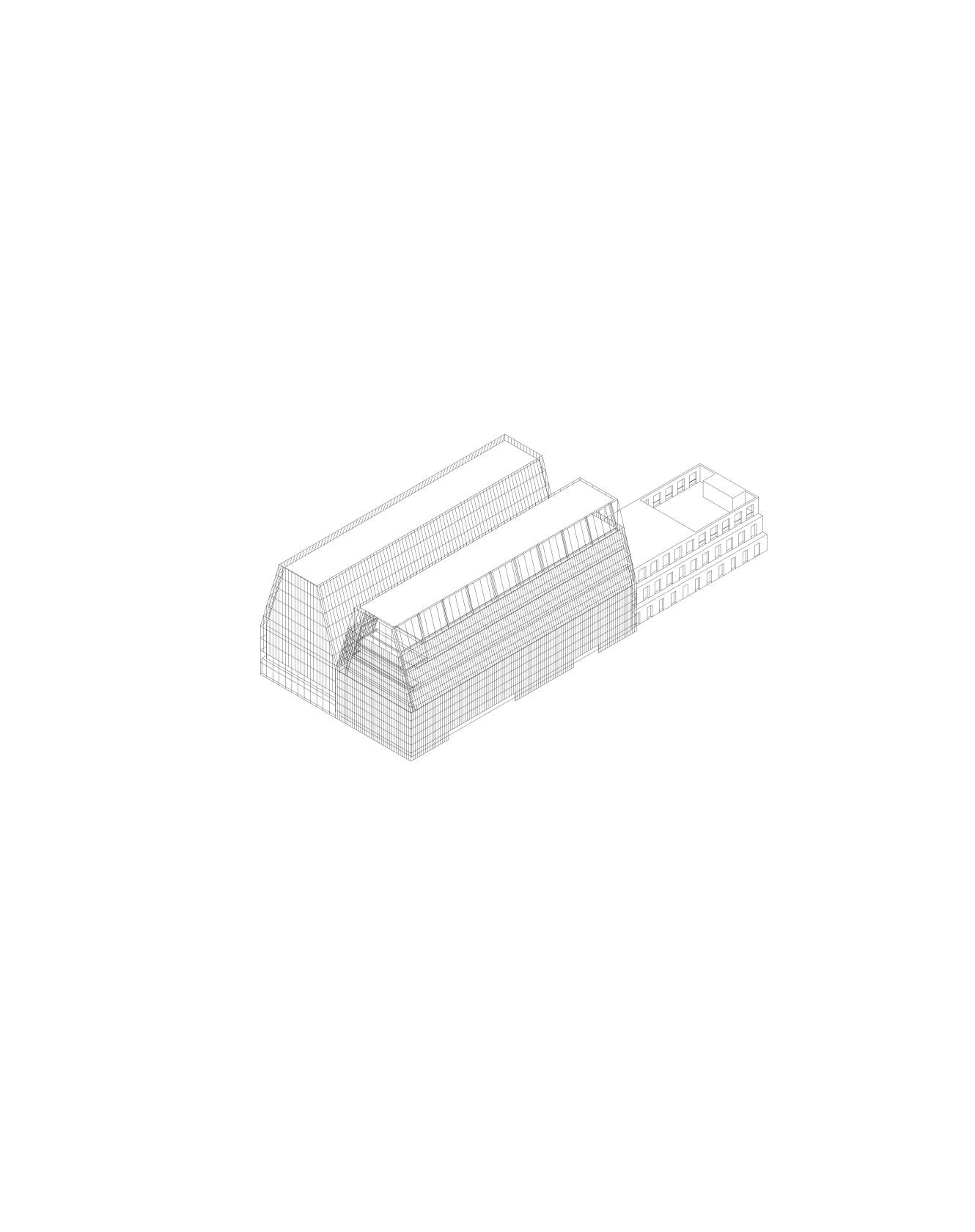
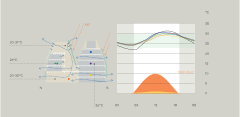
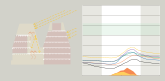
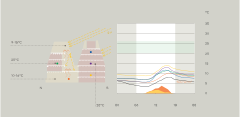
The library is a compact building with a large atrium that hosts the main circulation, brings plenty of daylight to the deep areas, and allows them to ventilate. The Dipartimenti -traditional library space- with very low internal gains, is in the south nave, to benefit from the sun and heat up naturally -books remain in the core of the building, on the northern areas, whereas the reading areas are close to the windows. The Media library with high internal gains is located in the north nave to avoid coupling its heat with the sun, and avoid glare. Since the atrium is not permanently occupied, it can tolerate a wider temperature range, becoming a buffer space. In winter, the sun rises naturally its temperature reaching 10 to 16ºC, whereas in summer, it is fully shaded in its south facade and windows are fully open for cross ventilation. Its temperature never rises above outdoors, and is usually below. It becomes a “better exterior” for the conditioned ones adjacent to it. Only 63% of the built volume is heated, and from the heated spaces, 41% of the envelope faces the atrium. Book storage is located underground, where hygrothermal conditions are very stable across the year, tending to Milan´s yearly average (13.5ºC), which naturally prevents book degradation. The envelope is protected from the strong sun with a metal mesh, which was optimised by orientation. In all the spaces, windows are operable to ventilate when outdoor temperatures are mild, and at night. The concrete of the structure is exposed to stabilise temperatures, and especially keep them cool during summer. Night cooling is performed via secured windows: should it be achieved via the mechanical system, energy demand for cooling would increase by some 50%.
Felt temperature
-
0
-
8
-
16
-
24
-
32
-
40
The felt temperature considers air temperature, surface temperatures, solar radiation, wind speed and humidity.

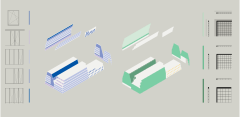
Operable windows and shading elements
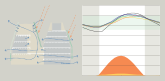
Summer functionning
Winter functionning