MainSilhouetteArtboard 1
Artboard 1
Chateau Lafite_Axo_silhouette
Artboard 3
Artboard 1
Artboard 3
Ghent_Axo_silhouette
GL Pau_Axo_silhouette-01
EMVS_Axo_silhouette
Ministerio_Axo_silhouette
Hamburg_Axo_silhouette
Cafferata_Axo_silhouette
Halle bioclimatique_Axo_silouhette-small
Palenque_Axo_silhouette
Crystal Palace_Axo_silhouette
Carriego_Axo_silhouette
BEIC
Milan, Italy
Comune de Milano
Baukuh, Onsite Studio
2022
30000 m²
New built
Cultural
In construction

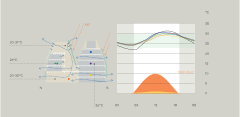
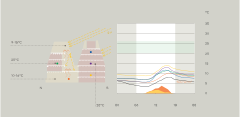
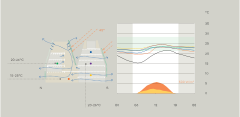
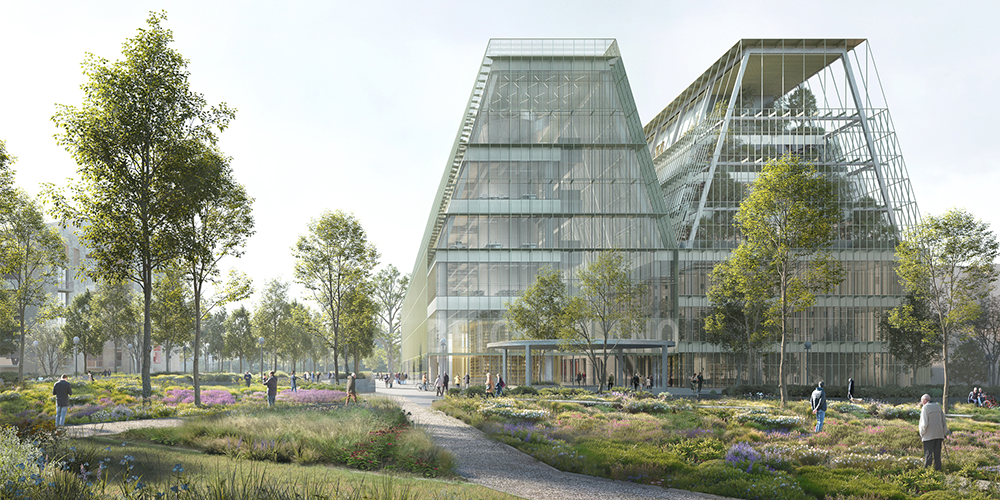
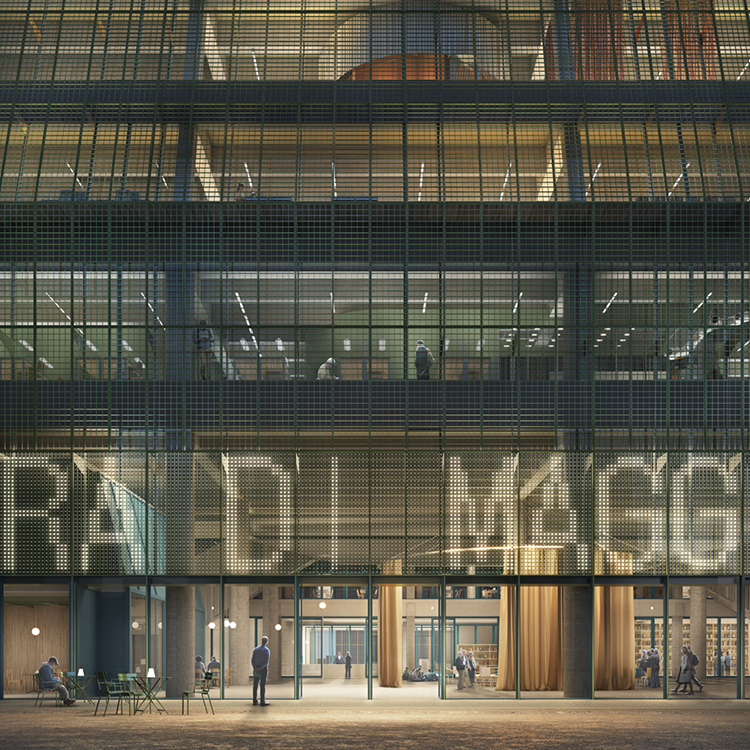
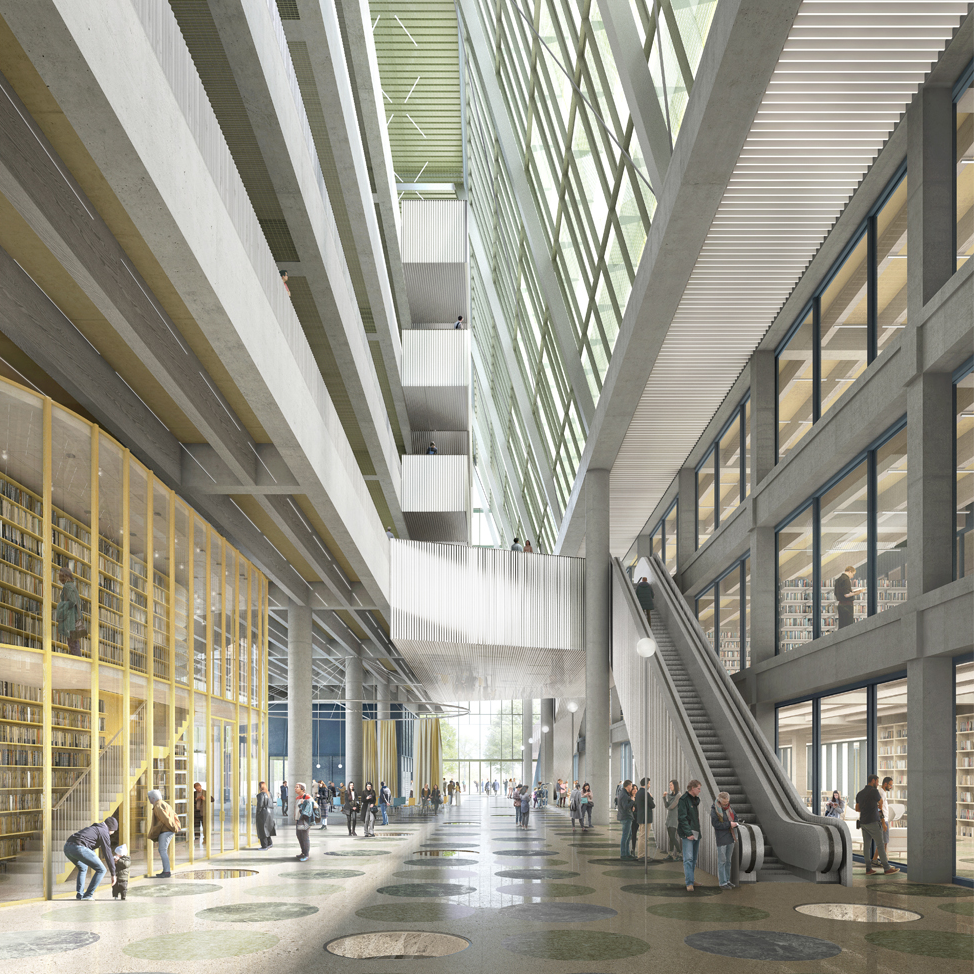
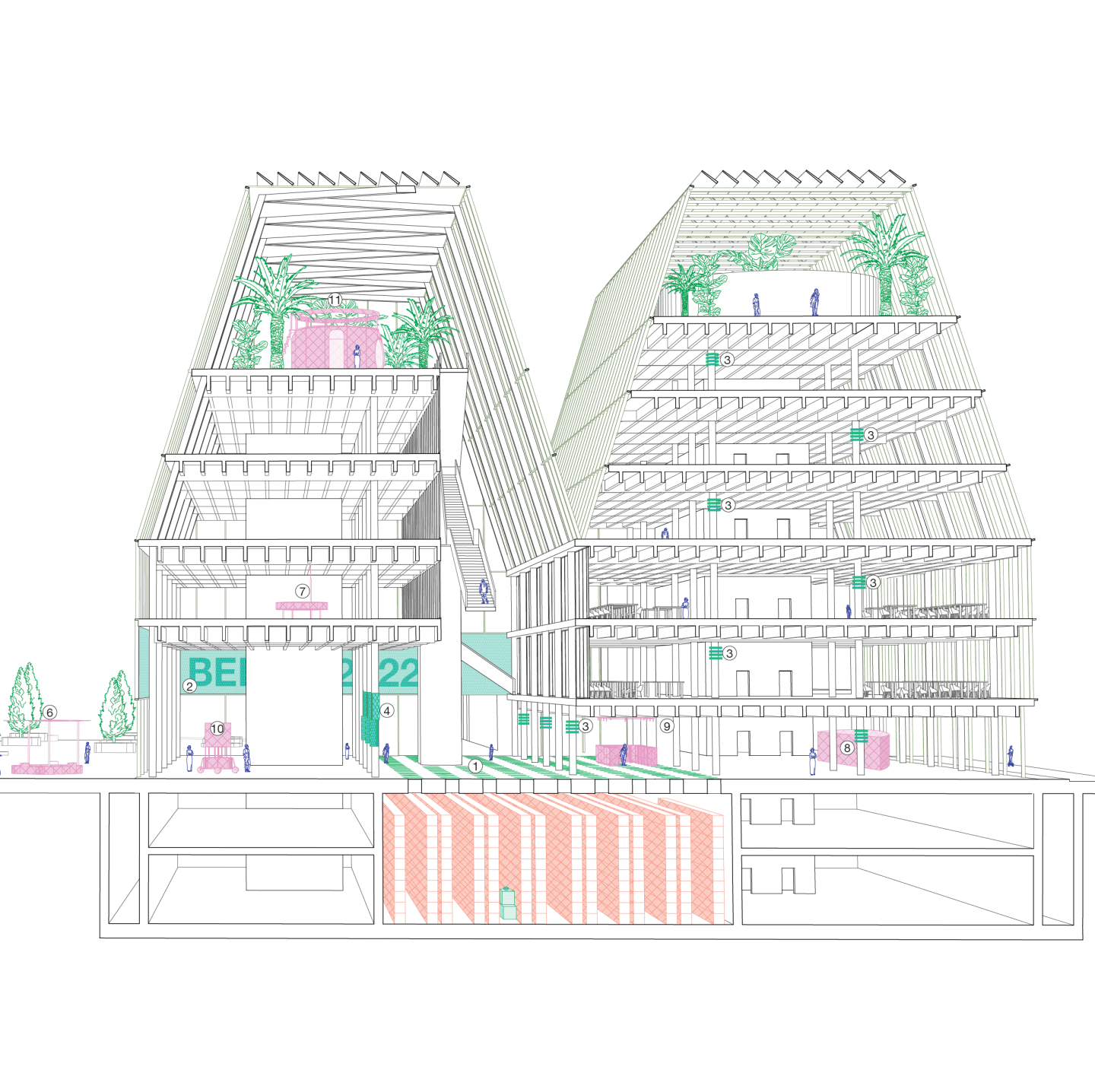
The library is a compact building with a large atrium that hosts the main circulation, brings plenty of daylight to the deep areas, and allows them to ventilate. The Dipartimenti -traditional library space- with very low internal gains, is in the south nave, to benefit from the sun and heat up naturally -books remain in the core of the building, on the northern areas, whereas the reading areas are close to the windows. The Media library with high internal gains is located in the north nave to avoid coupling its heat with the sun, and avoid glare. Since the atrium is not permanently occupied, it can tolerate a wider temperature range, becoming a buffer space. In winter, the sun rises naturally its temperature reaching 10 to 16ºC, whereas in summer, it is fully shaded in its south facade and windows are fully open for cross ventilation. Its temperature never rises above outdoors, and is usually below. It becomes a “better exterior” for the conditioned ones adjacent to it. Only 63% of the built volume is heated, and from the heated spaces, 41% of the envelope faces the atrium. Book storage is located underground, where hygrothermal conditions are very stable across the year, tending to Milan´s yearly average (13.5ºC), which naturally prevents book degradation. The envelope is protected from the strong sun with a metal mesh, which was optimised by orientation. In all the spaces, windows are operable to ventilate when outdoor temperatures are mild, and at night. The concrete of the structure is exposed to stabilise temperatures, and especially keep them cool during summer. Night cooling is performed via secured windows: should it be achieved via the mechanical system, energy demand for cooling would increase by some 50%.

Felt temperature

  • 0
  • 8
  • 16
  • 24
  • 32
  • 40
°C

The felt temperature considers air temperature, surface temperatures, solar radiation, wind speed and humidity.

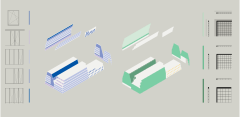
Operable windows and shading elements
Shading mesh 17x17x6cm
Shading mesh 10x10x5 cm
Shading mesh 10x10x15 cm with operable shading
Operable shading Ts<40
1/4 operable window, 13º aperture
2/4 operable window, 13º aperture
3/4 operable window, 13º aperture
Openable doors and 1/3 openable windows
Operable doors only

Summer functionning

Mechanically cooled at 26ºC
No cooling
Solar incidence
Air movement

Winter functionning

Mechanically heated at 20ºC
No heating
Solar incidence
Heat flow

Mid-season functionning

Entrance
Forum
Media library
Dipartimenti, floor 3
Dipartimenti, floor 1

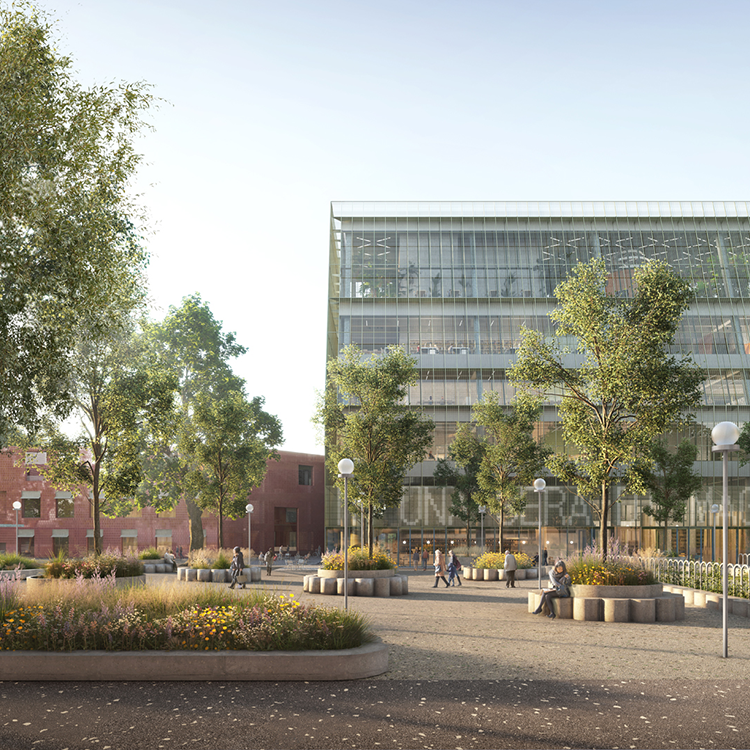
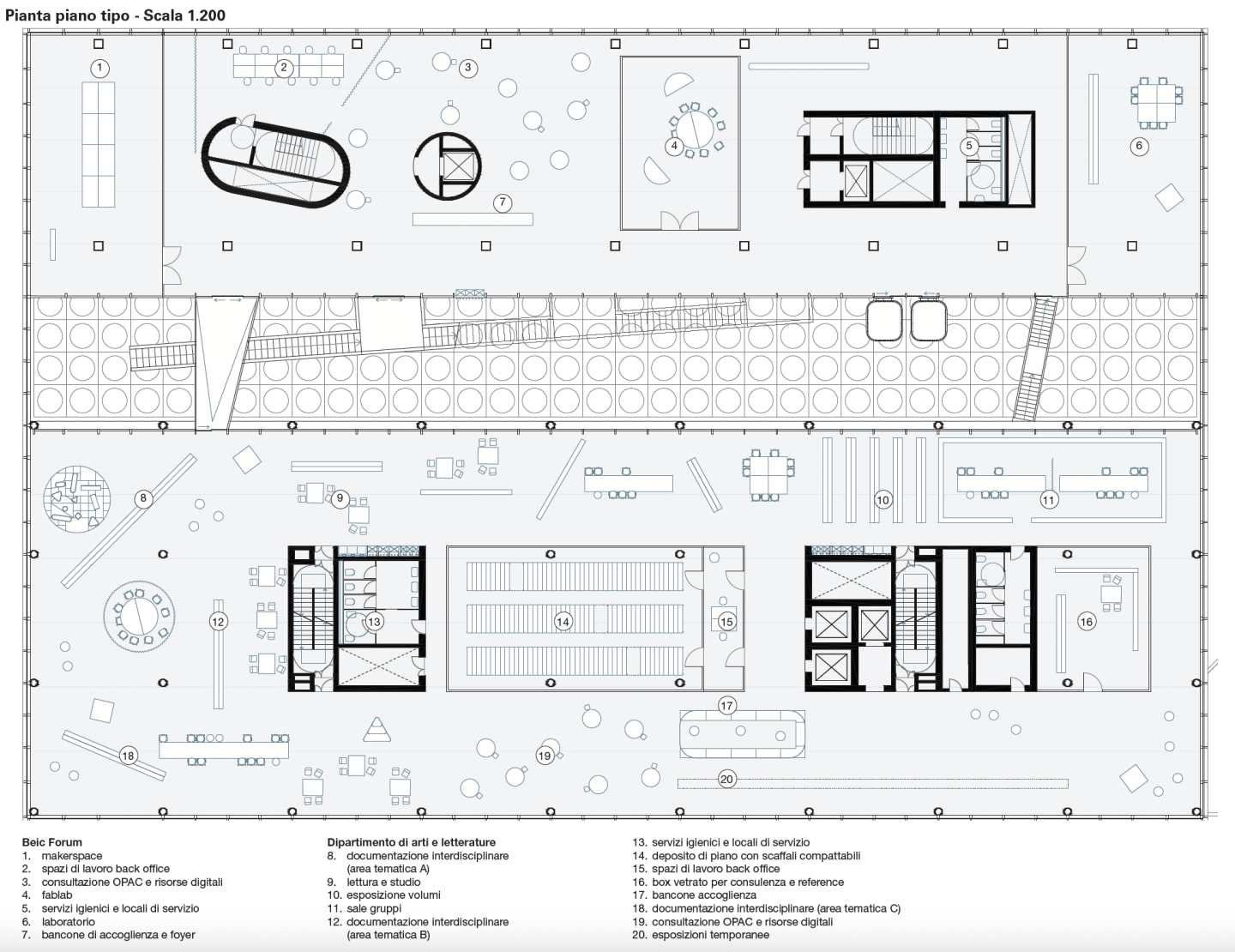
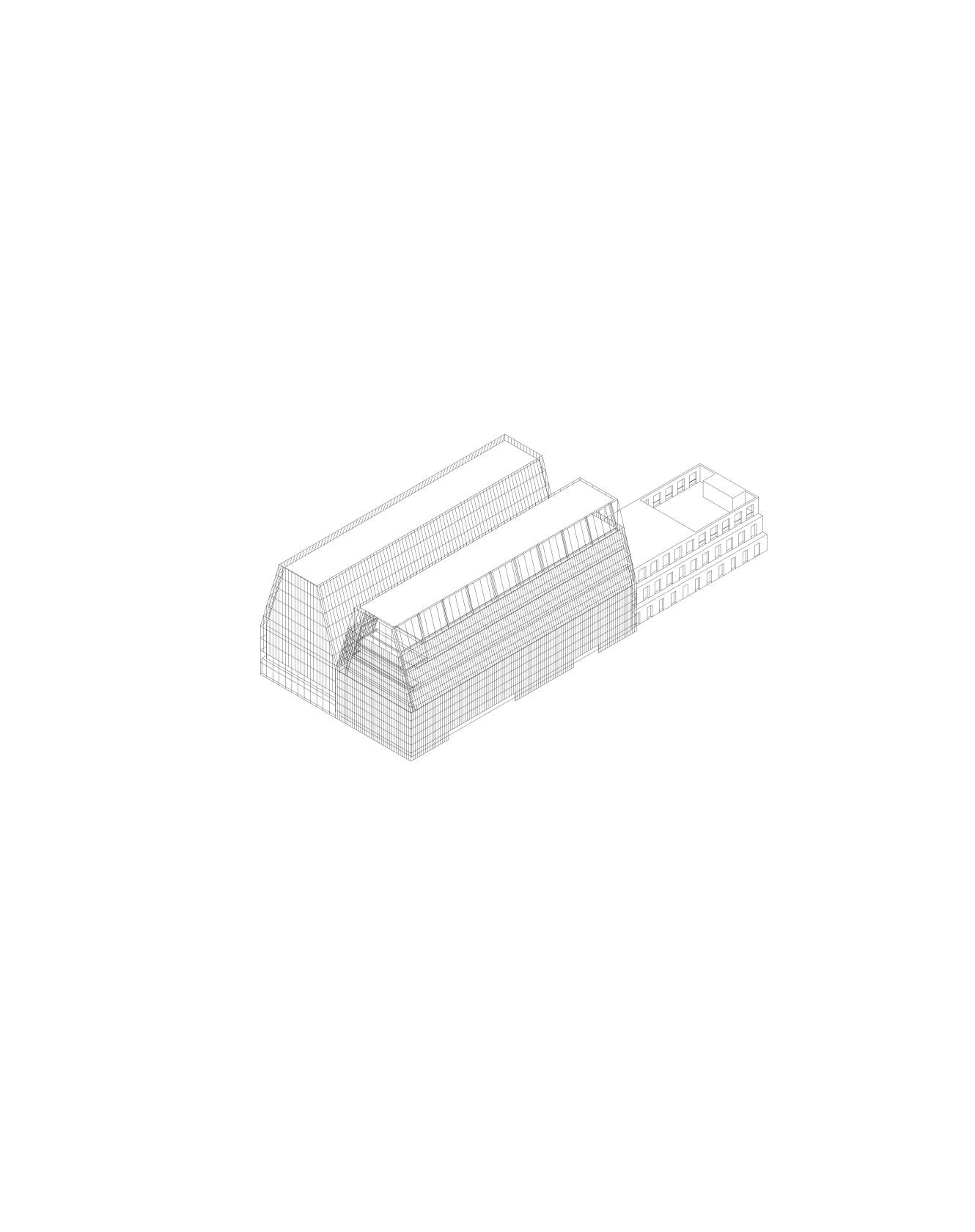
“The new European Library of Information and Culture (BEIC) is not a traditional library, where the treasures of a culture can be stored and made accessible for the future, but a laboratory, where to develop the tools necessary to produce contemporary culture. The new library exposes its productive atmosphere already in its physical conformation. The new building consists of two naves with a trapezoidal cross-section, extensively glazed, forming an explicitly industrial figure, part greenhouse, part station, part factory. The building appears as a large laboratory, sober, busy, open, ambitious, a Officina Milanese (Milanese workshop) entirely at the service of a multiple but concrete cultural life, where learning processes are always also an opportunity to construct objects, to invent devices, to make things. The new BEIC is a simple, compact building: the two naves accommodate the two main parts of the program: the northern volume houses the Forum, the southern one the Departments. The two naves are the same in terms of envelope, but different in content: the first is lighter and open towards the square, the second more dense, reserved, and silent. The two volumes give shape to a double, yet unitary building.”
Baukuh & On Site studio

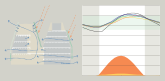
The climate of Milan is humid subtropical (Cfa in the Koppen Geiger classification), with hot and humid summers and relatively cold winters. In summer, the average high temperature is 28ºC, though the temperature exceeds 30ºC very often. Current predictions for 2050 suggest that Milan´s summers will suffer considerably climate change, as temperature is expected to increase by 2.5ºC on average, which is very high. Solar radiation is considerable, with a direct proportion that is very high, which is why solar control is key to avoid heat accumulation indoors -especially in the coming years. During the coldest months, temperature varies on average between 1 and 5ºC, and can fall below 0ºC for several days. Prevailing winds come all year round from the all the southern orientation, from the east to the west, with an average speed of 2 m/s, which is very low. This translates into considerable air pollution, and therefore a difficult situation for natural ventilation. However, the city has been working on a plan to improve air quality, which has reduced considerably pollution levels. Besides, the highest levels occur during winter, and during the mid-season and summer, pollution levels are low enough to naturally ventilate, which allows to rethink air renewal strategies in Milan.

Climate summary

Average temperature
t
(°C)
Avg. min. and avg. max. temperature
t
(°C)
Relative humidity
w
(%)
Daily diffuse solar radiation
r
(100xW/m²)
Daily total solar radiation
r
(100xW/m²)
Wind speed
a
(m/s)
Monthly precipitations
w
cm
Daily range
t
(°C)
Temperature predictions for 2050
t
(°C)

Sun path

Solar altitude
s
  • 0
  • 240
  • 480
  • 720
  • 960
  • 1200
kWh/m2

Wind rose

Wind frequency
a
  • 0
  • 1
  • 2
  • 3
  • 4
  • 5
  • 6
  • 7
  • 8
  • 9
  • 10
m/s
Close