MainSilhouetteArtboard 1
Artboard 1
Chateau Lafite_Axo_silhouette
Artboard 3
Artboard 1
Artboard 3
Ghent_Axo_silhouette
GL Pau_Axo_silhouette-01
EMVS_Axo_silhouette
Ministerio_Axo_silhouette
Hamburg_Axo_silhouette
Cafferata_Axo_silhouette
Halle bioclimatique_Axo_silouhette-small
Palenque_Axo_silhouette
Crystal Palace_Axo_silhouette
Carriego_Axo_silhouette
Galeries Lafayette Pau
Pau, France
Citynove
Bruther
2019
9800 m²
Renovation + extension
Commercial
Unbuilt project

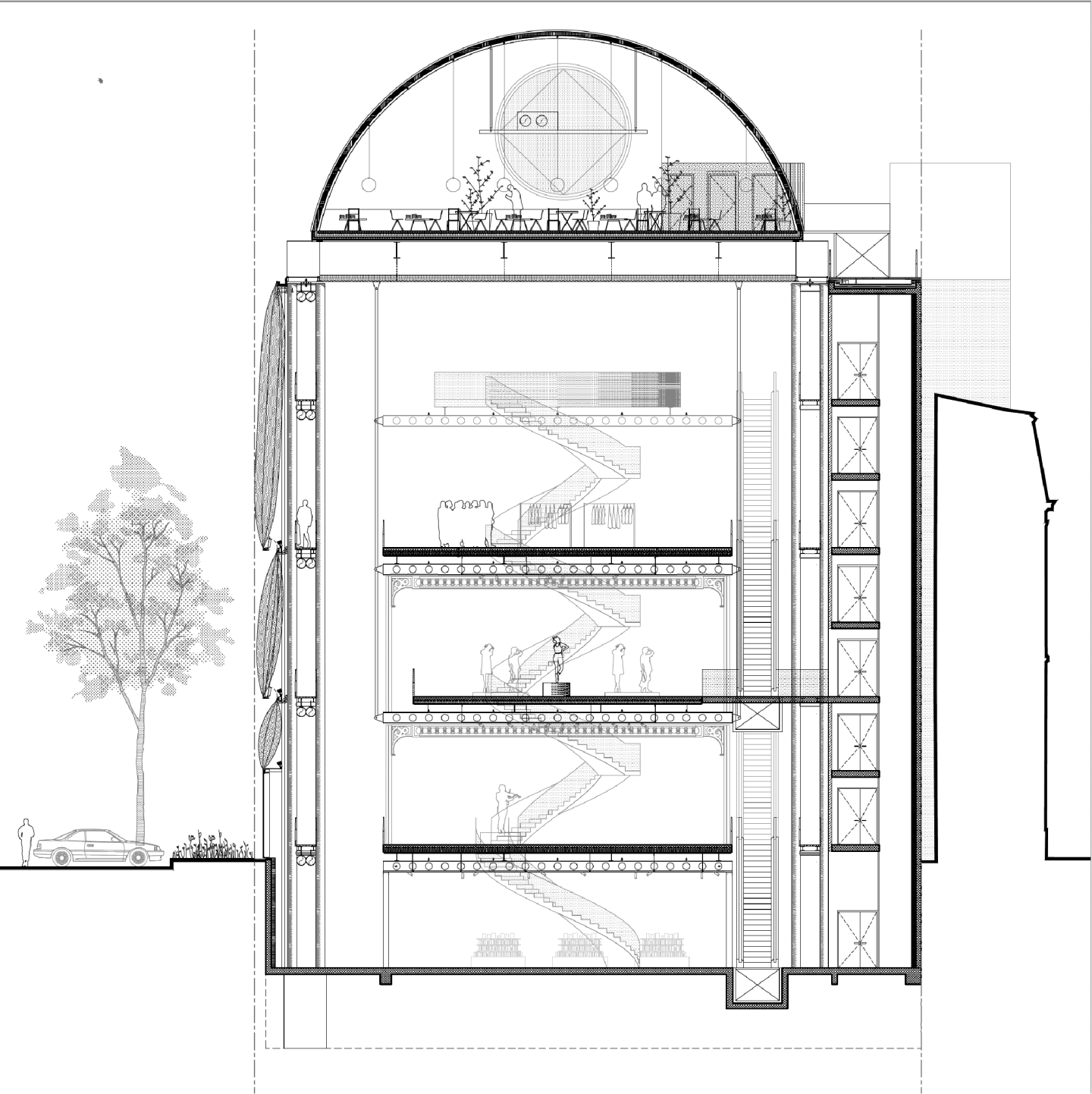
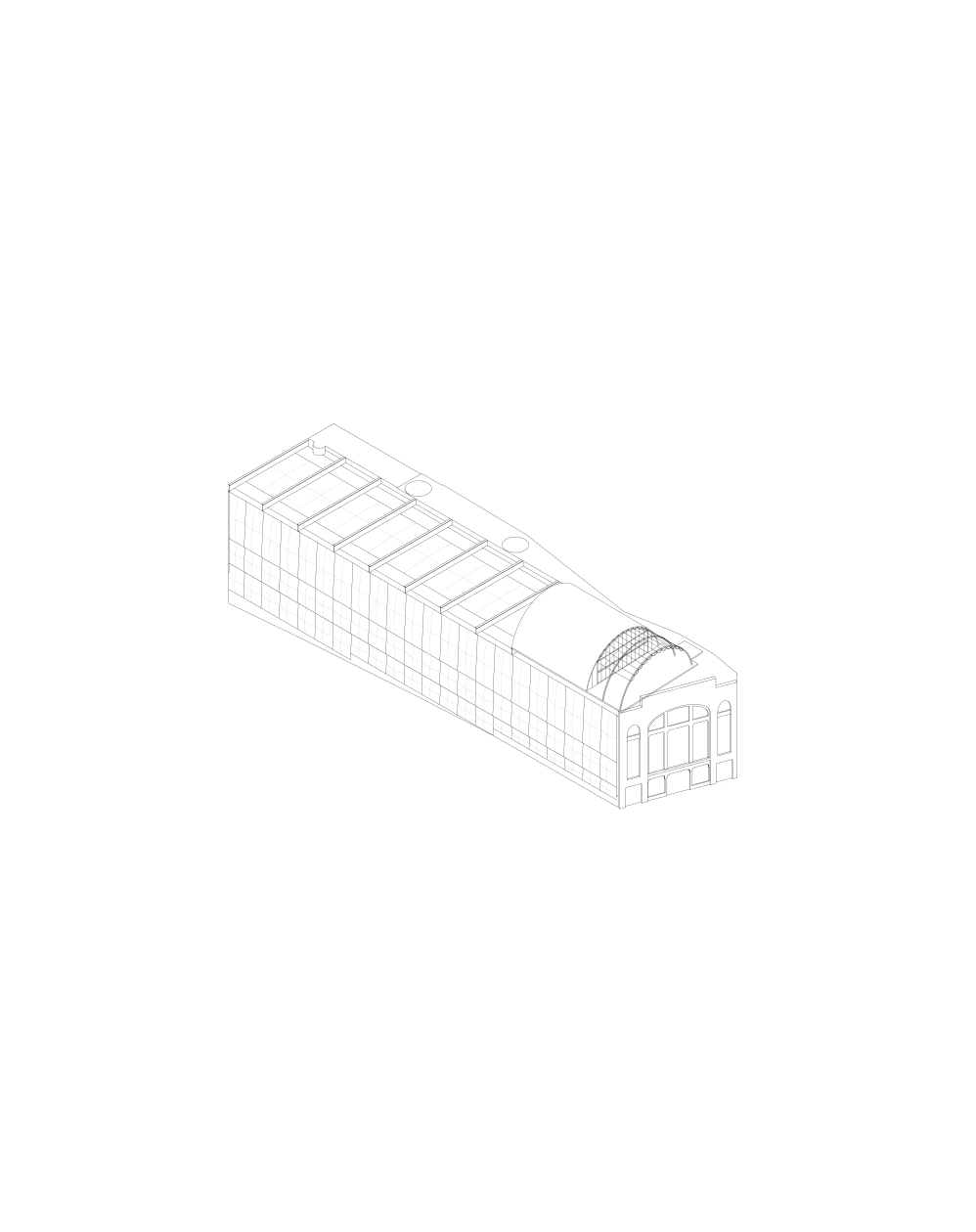
Large commercial spaces today face the challenge of competing against e-shopping, as they could disappear unless they reconvert into more pleasant spaces and remarkable experiences. For the Galeries Lafayette in Pau, the biggest challenge was to bring light inside within a highly constrained site. The project opted to have a fully transmissive façade (where openings were not possible as it is a party wall) and a fully transmissive roof to bring natural light to all levels. This strategy also allowed to capture the south-west sun and to heat up the space naturally in winter and through mid-seasons. However, it posed a challenge in summer, especially during hot sunny days. In depth studies were carried out to fine-tune the technical specifications of the ETFE cushions and of the shading with its activation schedule in order to tame the heat.

Daylight Autonomy DA[300]

  • 0
  • 10
  • 20
  • 30
  • 40
  • 50
  • 60
  • 70
  • 80
  • 90
  • 100
% of time with 300 lux

Daylight Autonomy calculates the percentage of time each point in space receives 300 lux or more naturally.
300 lux gives the impression of a daylit space
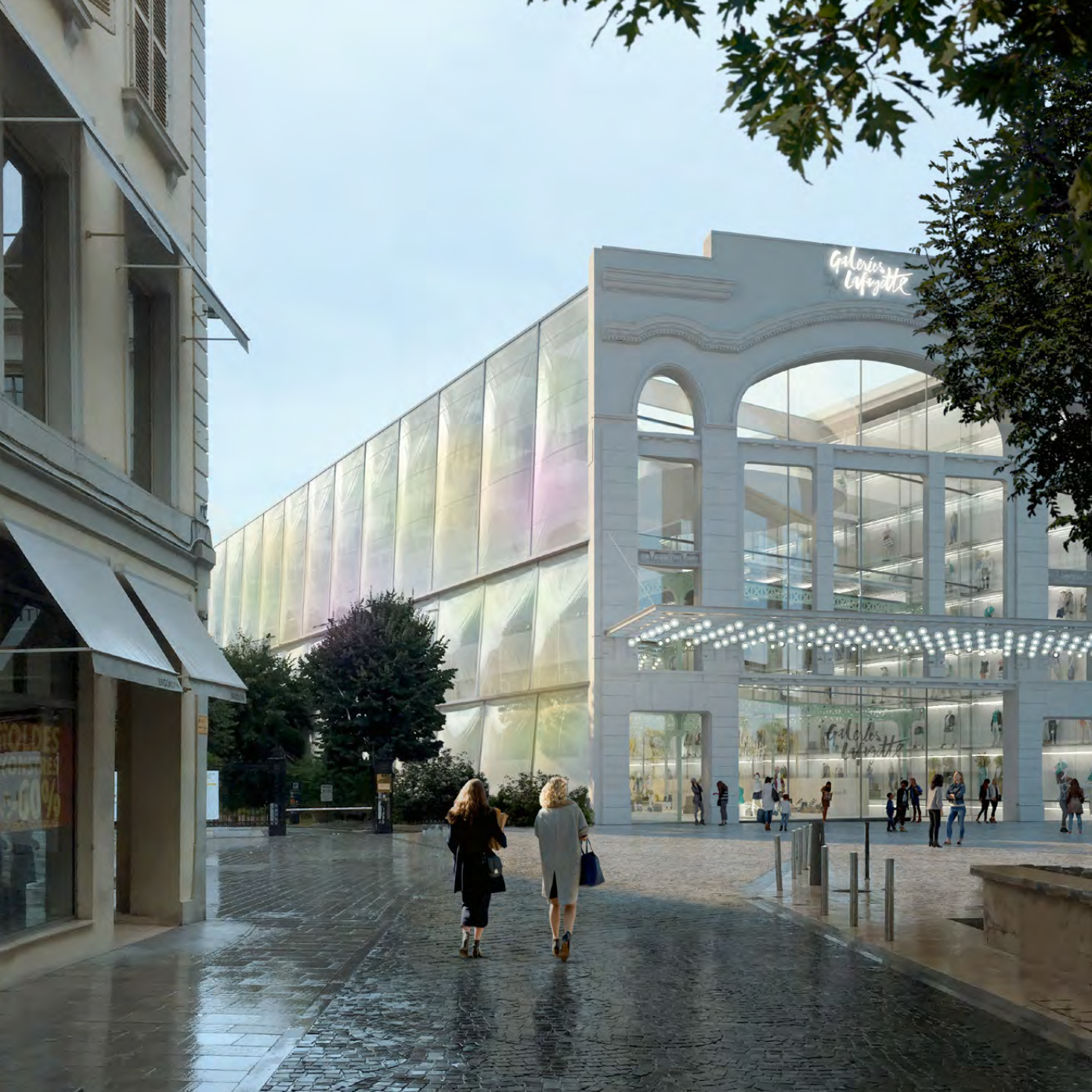
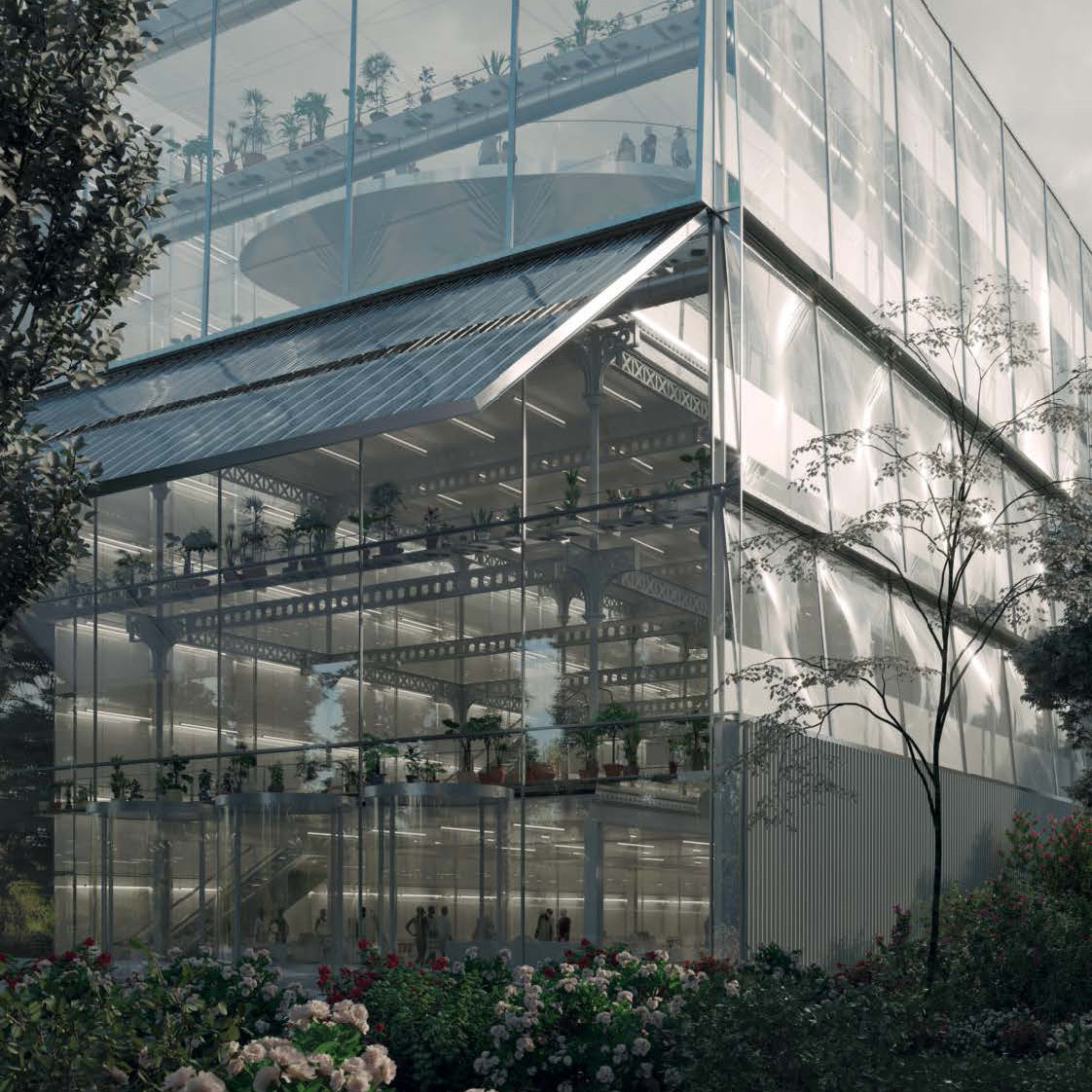
"As opposed to the former building, the rehabilitation project is not a cul-de-sac, but a passage; the entrance and the exit are not necessarily the same. It invites to walk through it, to enter from one side and go out through the other one. More than an isolated place, enclosed in itself, the building of Galeries Lafayette becomes an open passage, covered, open towards the neighbourhood, participating in the urbanity. It is a place that is at the same time cut from the city and a part of it, a place that is bright and protected, a privileged place. Spaces are established as vaste plateaux, functional and efficient, upon which selling areas ans stands can be organised in all the necessary rationality required by a department store."
Bruther

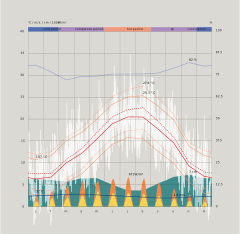
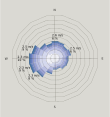
Pau´s climate is temperate oceanic, affected by its proximity with the Pyrénées. During summer, the average high temperature reaches 25ºC, which is rather high. Sunlight is abundant, with a strong direct radiation and a maximum solar altitude of 70º. Extreme summer days have temperatures above 30ºC, up until 36ºC. The diurnal range is quite high, with an average of 10ºC, which calls for using thermal inertia and night ventilation to control overheating. During winter, temperatures are low, with an average of 7ºC in January. These can drop below 0ºC for several days. The sky is mostly covered (61% of time), but for 23% of the time, it remains sunny which can be translated into beneficial solar gains. Wind speed has an anual average of 2.4 m/s, and prevailing winds come from west, even if none of the directions are negligible.

Climate summary

Average temperature
t
(°C)
Avg. min. and avg. max. temperature
t
(°C)
Relative humidity
w
(%)
Daily diffuse solar radiation
r
(100xW/m²)
Daily total solar radiation
r
(100xW/m²)
Wind speed
a
(m/s)
Monthly precipitations
w
cm
Daily range
t
(°C)
Temperature predictions for 2050
t
(°C)

Sun path

Solar altitude
s
  • 0
  • 240
  • 480
  • 720
  • 960
  • 1200
kWh/m2

Wind rose

Wind frequency
a
  • 0
  • 1
  • 2
  • 3
  • 4
  • 5
  • 6
  • 7
  • 8
  • 9
  • 10
m/s
Close